


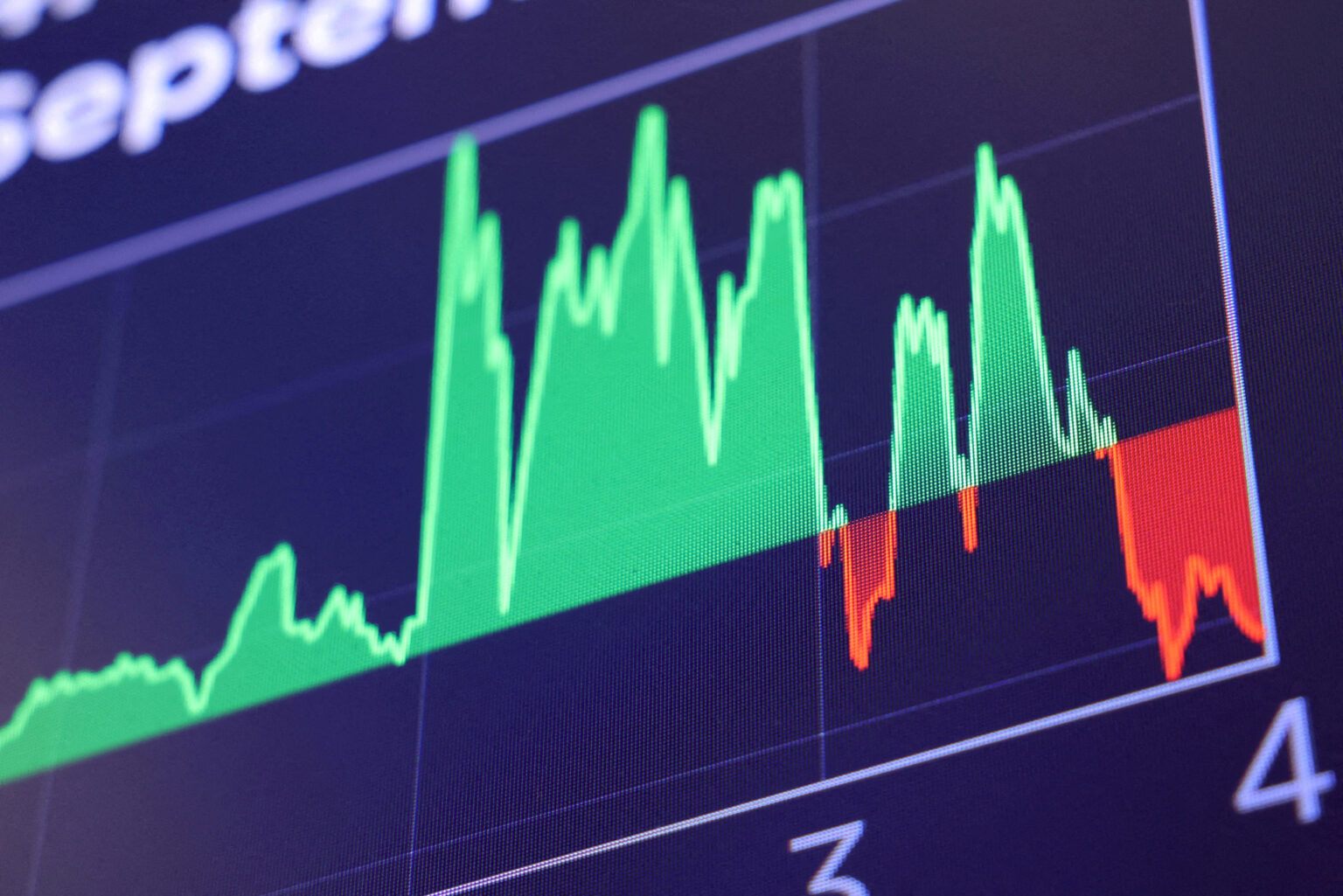
U.S. stock futures took a breather early on Tuesday in a dramatic development for the global stock market as the world’s two largest economies—the United States and China—locked horns in an escalating trade dispute. The two countries are entangled in this dispute over tariffs and their retaliatory measures. Each country is imposing tariffs on the other’s goods, while companies with exposure to China bear the brunt of the economic fallout.
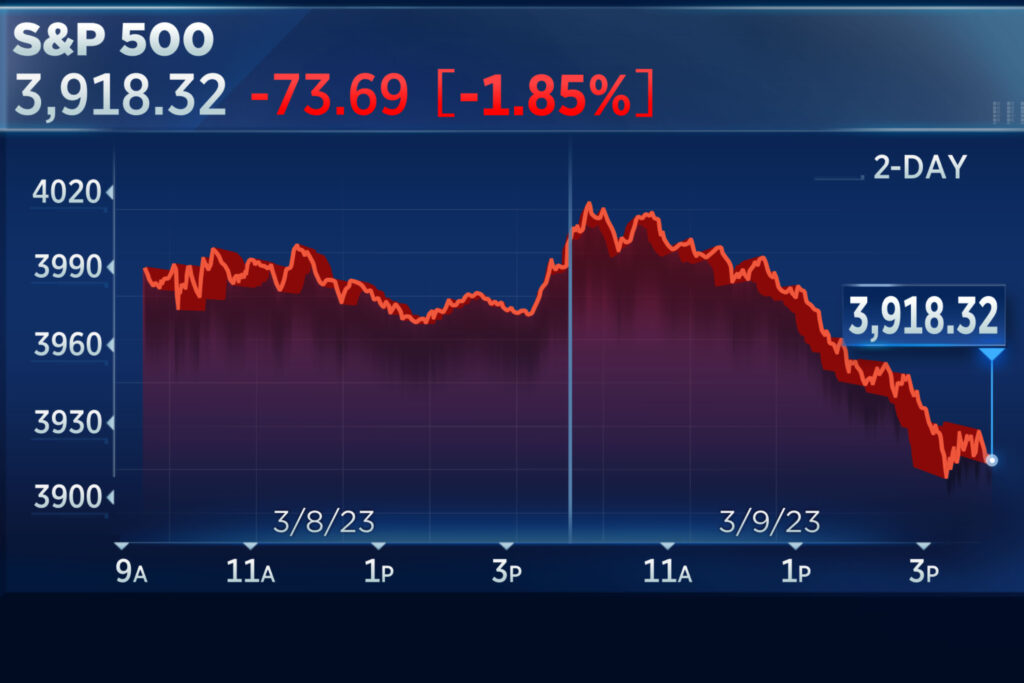
As the morning of February 4, 2025, approached, contracts for the major U.S. indices-the S&P 500 (ES=F), the Dow Jones Industrial Average (YM=F), and the Nasdaq 100 (NQ=F) – hovered near the flat line, a sign of uncertainty about the implications of the still-ongoing trade conflict on investors.
US-China Tariff Dispute: What’s at Stake?
A pause in the stock market comes as part of a significant tariff-related escalation, given the announcement by President Donald Trump to place a 10% tariff on goods made in China. The move was announced despite negotiations taking place between the U.S. and China, wherein the former president had already established separate deals with neighboring countries-Canada and Mexico-to delay the intended tariffs, which were scheduled for the same day.
This is a part of the greater strategy of the president and his administration to decrease the trade deficit between the two nations, and at the same time, to protect jobs in the United States,” he added. He however noted that China has not been sitting idle, and has reacted promptly by retaliating; the country will provide response through placing tariffs on a diverse list of U.S. products, including coal and oil.
For the U.S. market, the tariff war is a severe blow, particularly to companies with a significant amount of business transactions in China. Such companies are beginning to feel the economic burn as investors are getting worried about the long-term impact of tariffs on their revenues and profit margins.
Trump’s Tariff Strategy: A Double-Edged Sword
Trump made a unilateral move in imposing tariffs against China, a step that would lead to the trade war in an unprecedented way and would be devastating to the world’s supply chain, economic growth, and investor sentiment. Already, his policies have brought tensions between the U.S. and China, and the recent declaration to introduce a 10% tariff on Chinese goods has triggered more fear in the stock market.
But as of Tuesday, the U.S. is set to start new tariffs, and it was not evident that Trump was entirely serious about an all-out trade war. It was indeed reported that he will discuss an easing of the situation with China’s President Xi Jinping in the coming days, but uncertainty in these meetings is what keeps most investors guessing about the near-future direction for the economy.
Market Reactions: Winners and Losers
Amid the broad market uncertainty, the companies most directly exposed to the Chinese market really took it in the teeth. Shares in the leading chip maker Nvidia (NVDA) were down almost 3% Monday before recovering part of that decline in after-hours trading. Consumer tech giant Apple Inc. (AAPL) plummeted by 3.39% in regular trading but remained flat in after-hours trading, suggesting that investors are not too sure whether they should hold on or jump ship, fearful of future earnings potential due to the trade conflict.
One of the outstanding performers was Tesla (TSLA), an electric vehicle maker, which on Monday declined sharply by 5.1%, but managed a rebound of 1.39% in after-hours trading. The fluctuating fortunes of Tesla’s stock mark the volatility usually accompanying trade tensions between the United States and China, especially with companies involved in high-tech and auto manufacturing sectors.
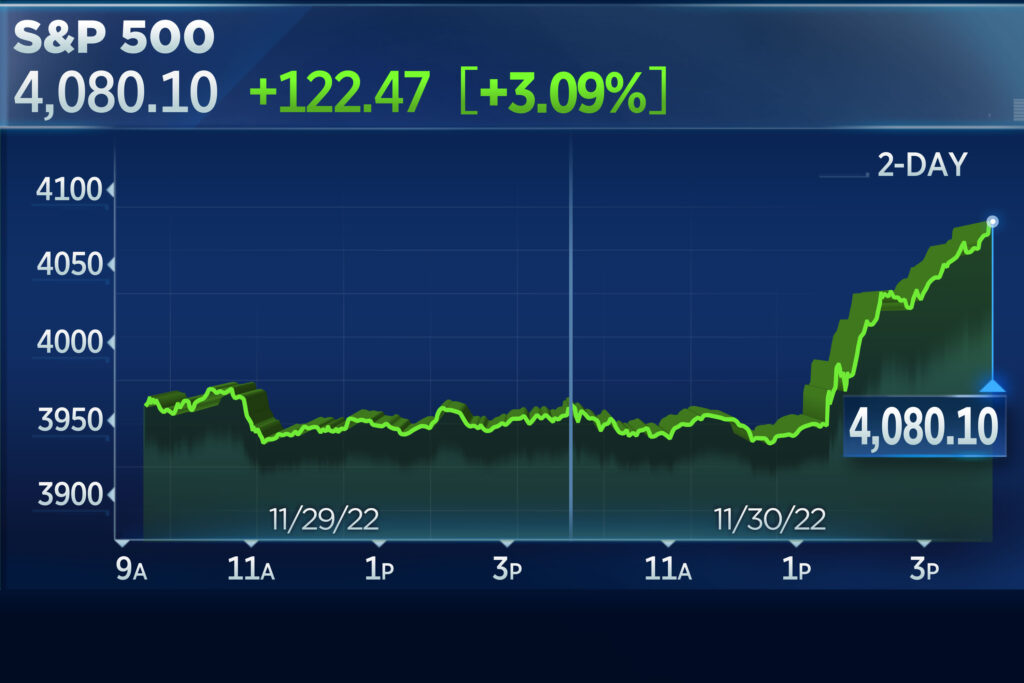
In contrast, Palantir Technologies (PLTR) gave Wall Street some good news. On the one hand, investors loved the revenue guidance for its first quarter and full year. Their calculations outstripped market expectations for both. So, Palantir’s shares rose 23.9% after hours. That shows that even in these uncertain times, some companies can stand out on growth prospects alone.
US Dollar and Gold: Investors Seek Safe Havens
While stocks were in a holding pattern, other financial assets showed signs of increased volatility. The U.S. dollar index (DX=F), which tracks the performance of the greenback against a basket of other major currencies, continued to climb after a slight pullback from recent highs.
The strengthening of the U.S. dollar is closely related to investor sentiment regarding the global economy and its resilience in the face of the current trade storm. A rising dollar often indicates confidence in the U.S. economy, but it can also make U.S. exports more expensive and reduce corporate profits for multinational companies. This dynamic is critical for sectors like tech, which rely heavily on global sales.
The gold, viewed as a safe-haven asset for many years, even traded based on the uncertain economic outlook. Its futures went up sharply to an all-time high and came back to about $2,850 per ounce. The trade war between the US and China makes gold a stable asset amid heightened market instability. Investors are finding their refuge in gold, fearing that the trade war may result in inflation or disturb economic activities further.
U.S.-Mexico-Canada Trade Deal: A Temporary Respite
One of the most notable developments on Monday was the deal struck by Trump with Mexico and Canada. Both countries had been subject to tariffs that were set to take effect on Tuesday. However, following the agreement, the 25% tariffs on both countries were postponed for at least 30 days.
Under such an arrangement, Canada and Mexico would also consider additional steps on curbing illegitimate immigrates into the U.S. A brief relief thus was granted on investors with an apparent ease within the trade dispute between the United States and her immediate neighbors since this matter took the contentious taste away. Announcing such developments triggered a new round of jumps for the Canadian dollar and the Mexican peso while their economies can no longer entertain any looming imposition of tariffs soon.

While this was a positive development between the U.S., Canada, and Mexico, which had eased some market pressure for now, the U.S.-China situation is far from settled. Investors continue to be wary of the economic fallout that could result from prolonged tensions with China.
What to Expect Going Forward
The next few weeks are the most critical in deciding how the stock market reacts to the evolving U.S.-China trade saga. Market responses will be directly susceptible to whether President Trump and Chinese President Xi Jinping could find a way to solve the disagreement as he prepares to discuss matters with President Xi Jinping.
In the near term, volatility in global stock markets is likely to continue. Firms that have significant exposure to China are still likely to bear the brunt of this shift. Economic data, corporate profits, and geo-political factors will continue to be drivers for the short-term performance of markets.
Frequently Asked Questions
How are the U.S.-China tariff war news affecting the current stock market situation?
The U.S. stock market is experiencing volatility due to the increasing trade tensions between the U.S. and China. Futures on major indices such as the S&P 500, Dow Jones, and Nasdaq 100 have been flat due to investor uncertainty. Companies that are exposed to China, such as Nvidia, Apple, and Tesla, have been directly affected by the tariff announcements.
How have tariffs affected the stock market?
Tariffs have been a cause of investor caution, especially for companies with large businesses in China. While some companies have seen their stock prices decline, others, such as Palantir Technologies, have had positive growth. The overall effect on the stock market is mixed, with market sentiment largely dependent on uncertainty over future developments in the trade war.
What role is the U.S. dollar playing in the current market situation?
The U.S. dollar has strengthened amid market uncertainty, reflecting investor confidence in the U.S. economy as a safe haven. However, a stronger dollar could also negatively affect U.S. exports, creating challenges for multinational companies that rely on international sales.
How is gold performing in the current market?
The prices of gold have increased considerably amid the current trade tensions. Investors are resorting to the precious metal as a safe haven. As the U.S. is set to impose new tariffs on Chinese goods, the appeal of gold as a stable investment has increased with the uncertainty in the global financial system.
How would the U.S.-Mexico-Canada trade deal impact the stock market?
The U.S.-Mexico-Canada trade deal has offered temporary relief to investors as both countries’ tariffs were put off. This deal has helped stabilize market conditions in the short term, but long-term prospects are still uncertain with the resolution of the U.S.-China tariff conflict and other economic policies that both the U.S. and China will enact.
While the stock market is on pause today, the ongoing U.S.-China tariff face-off will continue to impact investor sentiment and economic conditions in the weeks to come. How these issues unfold will play a crucial role in determining the future direction of global financial markets.


