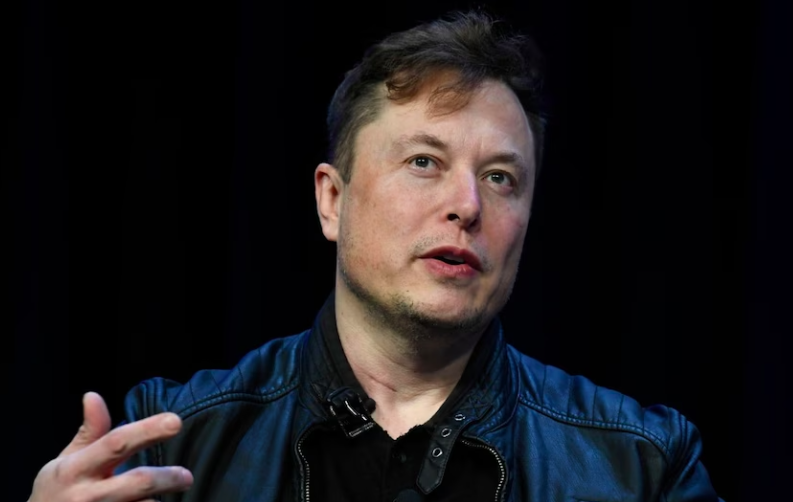
Elon Musk is once again in “wartime mode.” In a recent X post, the billionaire business magnate revealed that he has taken to sleeping in his office whenever his kids are not around with him — a regime he describes as necessary as he navigates a storm of problems throughout his empire.
“Back to working 7 days a week and sleeping in the office if my little kids are away,” Musk said, re-posting a vintage video where he refers to himself as a “Wartime CEO.”
This is an unprecedented challenge, and the Tesla, SpaceX, and X (formerly Twitter) CEO has resorted to grueling work habits to grit through crisis before. But this time, the pressure is coming from multiple fronts at the same time — a stagnating EV sector, fierce AI competition, regulatory attention, and the burden of gargantuan acquisitions and government spending.
The Return of the ‘Wartime CEO’
The clip Musk posted was a montage of Tesla’s most desperate times, when the company threatened to go under. Musk, there, tearfully confessed the cost his dedication had exacted:
“Nobody should work these many hours. This is not healthy. This is painful. It hurts my brain and my heart.”
That video, although years old, echoes the feeling Musk appears to be having again in mid-2025.
The term “wartime CEO” — one popularized in Silicon Valley circles — is used to describe a leader who excels in high-pressure, high-speed, existential times for their business. Musk has long asserted that he is more productive under pressure, frequently arguing that his ability to outwork his competition is a fundamental strength.
Why Now?
There are a few fires Musk is simultaneously extinguishing:
Tesla is experiencing margin pressure as EV penetration plateaus and new Chinese and Indian entrants emerge quickly. The Cybertruck launch has been plagued by delays and controversies, and investor sentiment has taken a knock.
SpaceX is pushing more aggressively on Starship missions, as NASA and defense contracts put the company on tight deadlines. Each failed test or launch miss could cost billions.
X is still recovering from its identity change after Twitter. The platform continues to lose big advertisers, is under regulatory heat, and has yet to reclaim the cultural relevance it once enjoyed.
Government Affairs: Musk’s tenure in AI and the Department of Government Efficiency (DOGE) has raised controversy, and he has publicly lambasted bureaucratic systems that “move at a 40-hour pace.”
In short, Elon Musk apparently believes the only way out is through — and that means working seven days a week and sleeping in his office again.
A History of Pushing Limits
Elon Musk’s style of leadership has always been characterized by extremes.
In 2018, Tesla’s “production hell,” Musk notoriously worked 120 hours a week and slept in the Fremont factory.
“It was life or death. We were losing $50 [million], sometimes $100 million a week. Running out of money,” he explained to CBS’ Lesley Stahl.
He has repeatedly asserted that he cannot ask employees to go all-in if he himself takes time off. As he put it:
“I can’t ask people to work super hard if I’m not doing it myself.”
In 2022, he even revealed that he had lived inside Tesla factories for nearly three years, sleeping on a tent or under desks. “It was damn uncomfortable sleeping on that floor,” he said. “And always, when I woke up, I’d smell like metal dust.”
The Culture of Overwork
Musk’s hard work ethic not only defined his own life, but also the company culture at his businesses.
When he purchased Twitter in 2022, he first made headlines by issuing an ultimatum: sign on for “hardcore” work or pack up and leave with severance. The San Francisco office even became a de facto dormitory for harried workers.
That action sparked backlash — and an investigation by the city’s building inspection agency. Musk, predictably, took to X:
“So the city of SF attacks companies providing beds for tired employees instead of ensuring kids are protected from fentanyl.”
Critics say that the kind of work culture he promotes romanticizes burnout, setting an unsustainable precedent in Silicon Valley. Supporters, however, view Musk as an extreme representation of hustle — a necessary evil for people creating at the bleeding edge of the industry.
Is It Sustainable?
Though Musk’s approach has brought about historic innovations — reusable rockets, mass-market electric vehicles, AI breakthroughs — it has also been a subject of concern regarding long-term health effects, both for him and his teams.
Mental health activists and corporate leaders alike have wondered whether this kind of dedication is a badge of honor or a warning sign.
But Musk is not apologetic. To him, creating the future involves living in pain today. “Pain is the price of progress,” he has said previously — and in 2025, it appears he’s paying it once more.
Elon Musk’s choice to again reside in his office is more than a matter of optics or toughness — it’s a message to the world that he views the next few months as make-or-break. Whether it’s X’s monetization path, SpaceX’s next flight, or Tesla’s changing approach, Musk is back in “wartime” — and he’s ready to battle from the frontlines.
Love him or hate him, one thing’s clear: when Elon Musk doubles down, the world pays attention.
Let me know if you’d like a carousel or caption version for Instagram or LinkedIn.