


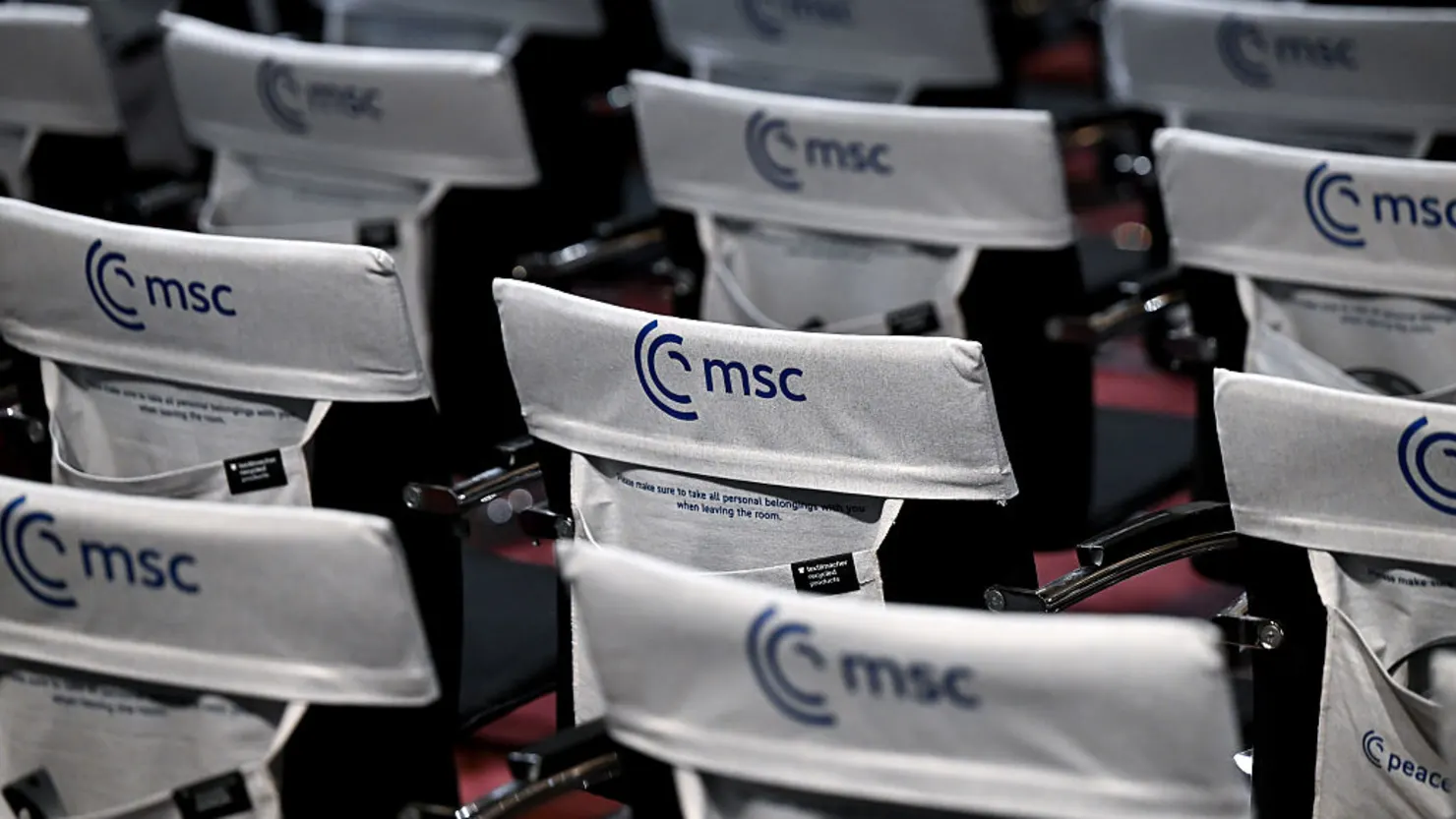
At this year’s Munich Security Conference, U.S. Secretary of State Marco Rubio delivered a message many European leaders were hoping to hear: the United States is not walking away from Europe.
After months of strained rhetoric and growing doubts about America’s long-term commitment to the region, Rubio’s remarks felt like a reset. Speaking to policymakers and diplomats gathered in Munich, he made it clear that Washington sees its alliance with Europe as strong, enduring, and essential.
His speech stood in sharp contrast to last year’s event, when U.S. Vice President JD Vance openly criticized European governments. That criticism left a mark. So when Rubio emphasized partnership, shared history, and common goals, it landed differently.
A Shift in Tone From Washington
Last Year’s Tensions
At the previous Munich Security Conference, Vice President JD Vance delivered tough remarks about Europe’s democratic standards, migration policies, and approach to free speech. His comments sparked debate across European capitals and raised concerns about whether the transatlantic relationship was entering a more confrontational phase.
For many European policymakers, the speech felt less like constructive criticism and more like a warning shot. It triggered uncomfortable questions: Was the United States growing impatient with Europe? Was the alliance changing in fundamental ways?
That backdrop made this year’s conference particularly significant.
Rubio’s Message of Partnership
When Marco Rubio took the stage this year, the tone was noticeably different. He stressed that the United States has no intention of abandoning its deep alliance with Europe. Instead, he framed the relationship as one built on shared heritage, common values, and joint responsibility for global stability.
Rubio said Washington wants Europe to succeed, not struggle. He pointed to the long history of cooperation between the two sides, arguing that their past successes prove they can handle new challenges together in the 21st century.
For many in the room, the reassurance mattered.
Europe’s Cautious Relief
Warm Words, Careful Optimism
German Foreign Minister Johann Wadephul welcomed Rubio’s remarks, describing them as a clear signal that the transatlantic partnership remains intact.
According to Wadephul, Rubio’s speech reassured European leaders that both sides still stand together. At the same time, he acknowledged that there are issues that will need serious discussion. The alliance may be strong, but it is not without friction.
That mix of relief and caution reflects a broader mood in Europe. Policymakers are encouraged by Rubio’s tone but remain aware that rhetoric does not always translate into policy.
Why Europe Is Still Wary
Even as they welcomed Rubio’s comments, many European leaders understand that the global landscape has changed. The war in Ukraine, rising tensions with China, and shifting political winds in Washington have all influenced how Europe views its relationship with the United States.
There is a growing belief across the continent that Europe must become more self-reliant, both militarily and economically. The idea is not to replace the United States, but to reduce dependence.
Over the past year, discussions about strengthening Europe’s defense capabilities and boosting domestic industries have gained momentum. The message from many European capitals is clear: partnership with America is crucial, but Europe must be prepared to stand on its own if necessary.
The Bigger Picture: A Changing Transatlantic Alliance
Shared Challenges in a New Era
Rubio’s speech emphasized that the United States and Europe face new threats and new tests in the 21st century. These include geopolitical conflicts, cybersecurity risks, energy security concerns, and economic competition from emerging powers.
Both sides understand that global stability depends heavily on cooperation between Washington and European capitals. NATO remains a cornerstone of that relationship, and economic ties between the U.S. and Europe are among the strongest in the world.
But cooperation now requires adaptation. The alliance must evolve to address modern challenges that look very different from those of the Cold War era.
Independence Without Separation
European leaders increasingly talk about strategic autonomy. This concept does not mean breaking away from the United States. Instead, it reflects a desire to build stronger European defense industries, diversify supply chains, and enhance political cohesion within the European Union.
Rubio’s reassurance may ease fears of abandonment, but it does not eliminate Europe’s push for greater independence. In fact, his speech may reinforce it. If the partnership is strong, then a more capable and resilient Europe can only make it stronger.
Why the Munich Security Conference Matters
The Munich Security Conference has long served as a barometer of transatlantic relations. Leaders from both sides of the Atlantic use the event to signal priorities, manage disagreements, and set the tone for the year ahead.
This year’s gathering was particularly important because it came at a time of uncertainty. Questions about U.S. foreign policy direction, combined with Europe’s evolving strategic ambitions, created a tense atmosphere.
Rubio’s remarks helped ease that tension. By emphasizing unity and continuity, he offered a sense of stability at a moment when many feared unpredictability.
What Happens Next?
Dialogue and Differences
While Rubio’s speech was well received, it does not erase the underlying differences between the United States and Europe. Issues such as defense spending, trade policies, digital regulation, and migration remain areas of debate.
European leaders are likely to continue pushing for stronger internal coordination and investment in defense. At the same time, they will seek clarity from Washington about its long-term commitments.
The real test will not be speeches at international conferences, but policy decisions in the months ahead.
A Relationship That Endures
Despite moments of tension, the transatlantic alliance has proven resilient for decades. It has weathered political shifts, economic crises, and geopolitical upheaval.
Rubio’s message in Munich tapped into that history. He reminded his audience that the United States and Europe have succeeded together before and can do so again.
For now, his words have bought goodwill and perhaps a measure of renewed trust. But European policymakers will be watching closely to see whether those words are followed by consistent action.
This year’s Munich Security Conference highlighted both the strength and the complexity of the U.S.-Europe relationship.
After a year marked by sharp criticism and growing doubts, Marco Rubio’s reassurances were welcomed across European capitals. His message of partnership and shared purpose offered a sense of relief.
Yet Europe’s cautious stance remains. Leaders across the continent understand that while the alliance is deep, it must adapt to a rapidly changing world. Independence and cooperation are no longer seen as opposites, but as complementary goals.
In Munich, the tone shifted from confrontation to collaboration. Whether that shift signals a lasting reset or simply a pause in tensions will depend on what comes next.


