


Trump’s State of the Union: 5 Big Takeaways From a Speech Focused on the Economy
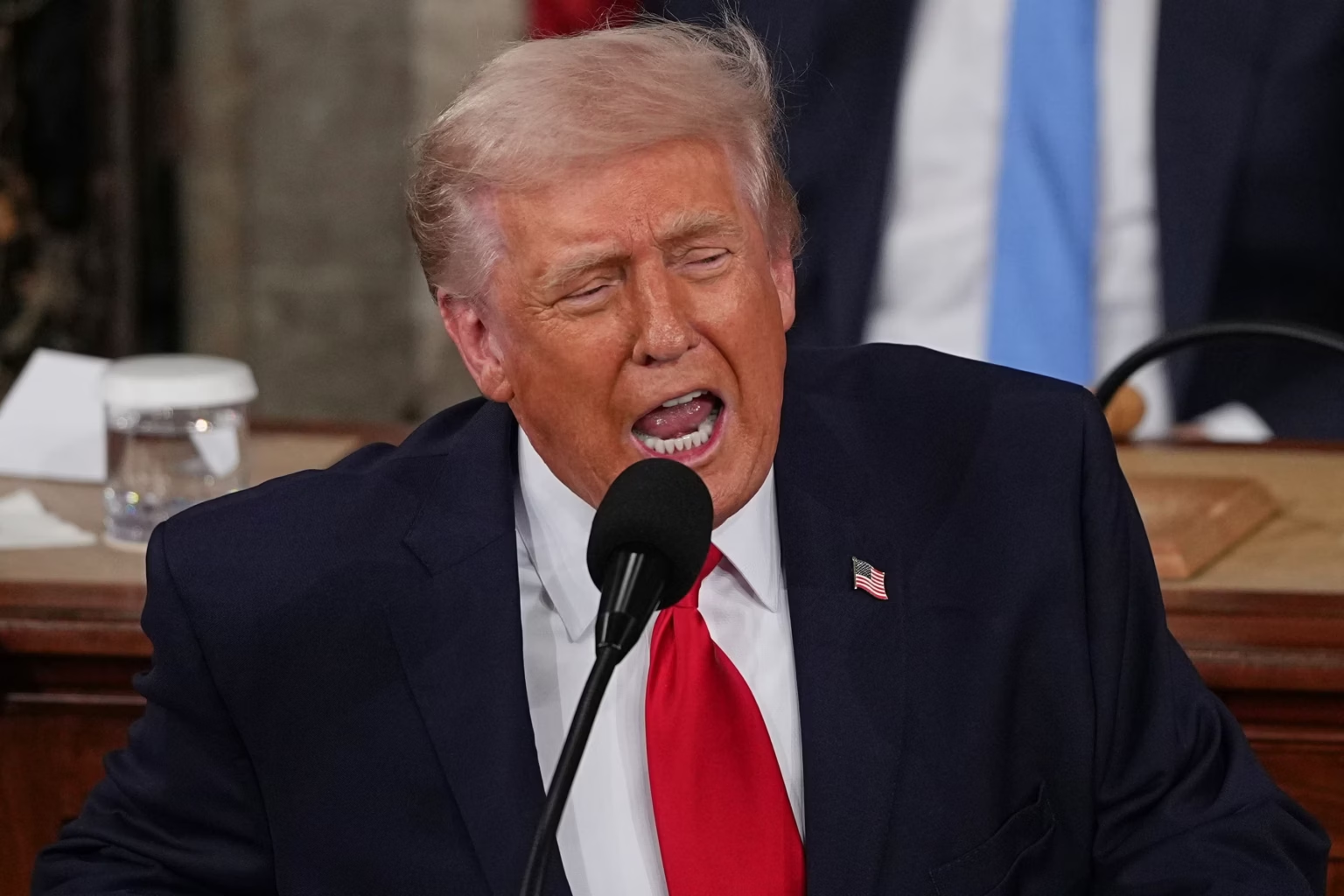
President Donald Trump delivered a nearly two-hour State of the Union address Tuesday night, using the high-profile platform to make one thing clear: he believes the U.S. economy is on the verge of a major boom.
The speech comes at a critical political moment. With the 2026 midterm elections less than nine months away, Trump faces slipping poll numbers on the economy — traditionally one of his strongest issues. Control of Congress could be at stake, and with it, his ability to push through key parts of his agenda.
Rather than focusing heavily on foreign policy or partisan fights, Trump centered his remarks on kitchen-table issues: retirement savings, housing affordability, inflation, and economic growth.
Here are five major takeaways from the night.
1. A Government-Backed 401(k)-Style Plan for Workers
One of the most headline-grabbing proposals was Trump’s call for a new government-backed retirement savings program for Americans who do not receive an employer match.
Trump proposed creating a plan similar to the Thrift Savings Plan offered to federal workers. Under his proposal, eligible workers would receive up to $1,000 per year in matching contributions from the government.
“My administration will give these oft-forgotten American workers access to the same type of retirement plan offered to every federal worker,” Trump said.
How Would It Work?
According to administration officials, the program would build on the “Savers Match” tax credit created under the Secure 2.0 law passed in 2022. Beginning in 2027, low-income workers would be eligible for a government match of up to $1,000 annually.
The White House says the plan would:
- Offer diversified, index-based investment options
- Provide government matching contributions
- Give more Americans access to stock market growth
Trump framed the idea as a way to ensure that more Americans benefit when markets rise.
However, critics note that not all Americans are invested in the stock market and argue that broader affordability issues remain a bigger concern for many families.
Still, the proposal signals a populist turn on retirement policy — targeting workers who often feel left behind in traditional employer-sponsored systems.
2. A Push to Block Big Investors From Buying Up Homes
Trump also doubled down on a proposal to restrict large institutional investors from purchasing single-family homes.
“I’m asking Congress to make that ban permanent,” Trump said. “We want homes for people, not corporations.”
The proposal would codify an executive order he previously signed aimed at limiting private equity and corporate investors from acquiring large numbers of residential properties.
Why This Matters
Housing affordability remains one of the most pressing economic issues in the country. Rising home prices and mortgage rates have pushed ownership out of reach for many first-time buyers.
Interestingly, Trump’s stance echoes proposals from progressive Democrats who have long criticized large investment firms for buying up housing inventory and driving up prices.
Just hours before the speech, Democrats introduced their own housing-related plan targeting large investors.
The overlap highlights how housing affordability has become a bipartisan political pressure point — especially with midterm elections approaching.
3. “The Economy Is Roaring,” Trump Says
Throughout the speech, Trump painted an optimistic picture of the economy.
“The economy is roaring like never before,” he declared.
This comes despite polls showing that many voters remain concerned about affordability and cost of living. Democrats continue to criticize Trump and Republicans over grocery prices, housing costs, and everyday expenses.
Inflation Claims
Trump also took credit for what he described as major progress in fighting inflation — an issue that weighed heavily on former President Joe Biden during his time in office.
“In 12 months, my administration has driven core inflation to the lowest level in more than five years,” Trump said.
Recent data from the Bureau of Labor Statistics shows that:
- The consumer price index rose 2.4 percent year-over-year in January
- Core inflation, excluding food and energy, rose 2.5 percent — its lowest level since April 2021
While inflation has cooled compared to previous peaks, many Americans still report feeling squeezed by higher prices compared to pre-pandemic levels.
Trump’s strategy appears clear: frame the economic narrative as one of recovery and strength heading into the 2026 campaign season.
4. Democrats Push Back — But Avoid Major Disruption
Although the speech included tense moments, Democrats largely avoided major interruptions.
Trump challenged lawmakers to stand if they agreed that the first duty of government is “to protect American citizens, not illegal aliens,” prompting visible frustration among some Democrats.
Reps. Ilhan Omar and Rashida Tlaib were involved in brief exchanges during the address.
Meanwhile, Rep. Al Green was removed from the chamber after holding a protest sign. It marked the second year in a row he was ejected during a Trump speech.
Despite these moments, the evening did not devolve into prolonged disruptions. Democratic leaders appear to be calibrating their strategy carefully as they focus on economic messaging ahead of the midterms.
5. A Mostly Domestic-Focused Speech
Unlike some previous addresses, Trump largely avoided extended discussions of global conflicts or foreign policy battles.
He did briefly mention Iran, noting ongoing negotiations and reiterating that he would not allow the country to obtain a nuclear weapon.
“My preference is to solve this problem through diplomacy,” Trump said, while emphasizing that military options remain on the table.
But overall, the speech remained centered on domestic issues — retirement savings, housing, inflation, and economic confidence.
Why the Domestic Focus?
Political analysts suggest the emphasis reflects the current electoral landscape. Democrats have performed strongly in several recent off-year elections by focusing on affordability and day-to-day economic concerns.
Republicans, meanwhile, are eager to shift attention to issues that resonate most with voters’ daily lives.
After the speech, Sen. John Kennedy praised Trump’s focus.
“What I was hoping he’d do would be to talk about the things moms and dads worry about when they lie down at night to sleep and can’t,” Kennedy said. “And he did.”
The Bigger Picture: A Midterm Strategy in Motion
Trump’s State of the Union was not just a policy speech — it was an early midterm campaign blueprint.
By spotlighting:
- Retirement security for working Americans
- Housing affordability
- Lower inflation numbers
- Economic optimism
He is clearly trying to reclaim economic confidence before voters head to the polls in 2026.
Whether voters feel the same level of optimism remains uncertain. Polling suggests skepticism lingers. But the president’s message was consistent and direct: the economy is improving, and more help is on the way.
With Congress on the line and political tensions rising, this speech may mark the official start of a high-stakes election season.


