


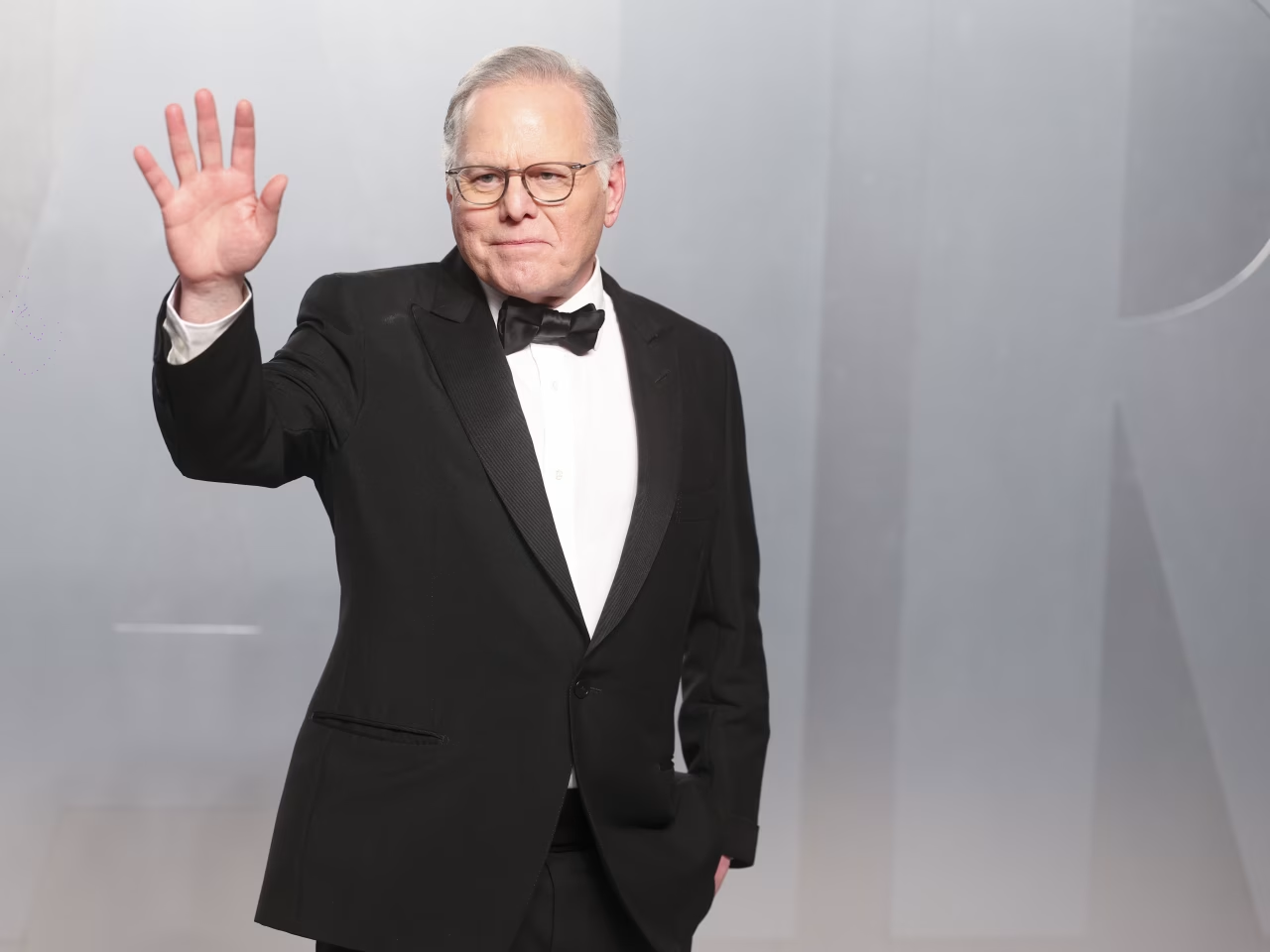
The $800 Million Question: How One Deal Could Transform a CEO’s Payday
When massive corporate deals happen, the spotlight is usually on the companies involved. But sometimes, the real story is about the people at the top.
That’s exactly what’s happening with Warner Bros. Discovery CEO David Zaslav. A potential acquisition involving Paramount Global and Skydance could lead to one of the biggest executive payouts in recent history — possibly exceeding $800 million.
At the center of it all is a little-known tax rule that was originally designed to prevent excessive CEO compensation. Ironically, it may now be helping create it.
Breaking Down the Massive Payout
What Zaslav Could Receive
According to regulatory filings, Zaslav’s compensation package tied to the deal is made up of several components:
- Around $500 million in stock awards
- Approximately $115 million in already vested stock
- About $34 million in cash payments
Even without special tax-related payments, the total is estimated to reach roughly $667 million.
That alone would be staggering. But there’s more.
The “Golden Parachute” Boost
Zaslav could receive an additional $335 million tied to something called a “golden parachute” tax reimbursement.
This pushes the potential total payout to well over $800 million.
So what exactly is this tax — and why does it exist?
What Is the Golden Parachute Tax?
A Rule Meant to Limit Excess
The golden parachute tax was introduced in the 1980s by the U.S. government. Its purpose was simple:
- Discourage excessively large payouts to executives when companies are sold
- Prevent CEOs from benefiting too much from mergers and acquisitions
The rule imposes a 20% tax on certain executive payouts — but only if they exceed a specific threshold.
When Does It Apply?
The tax is triggered when a CEO’s payout is:
- More than three times their base salary and target bonus
Once that threshold is crossed, the excess amount gets taxed heavily.
In theory, this should discourage oversized compensation packages.
But in reality, things have evolved differently.
The Twist: Companies Paying the CEO’s Tax
What Is a “Gross-Up”?
Instead of reducing payouts, companies often choose to cover the tax on behalf of the executive. This is known as a “gross-up.”
In this case:
- Paramount Global has agreed to reimburse Zaslav for the tax
- That reimbursement alone could reach up to $335 million
In other words, instead of limiting pay, the tax can actually increase the total cost of executive compensation.
Why Would Companies Do This?
According to the deal terms, this arrangement helps keep Zaslav competitive with other potential deals.
For example:
- A previous proposal involving Netflix reportedly would not have triggered the same tax
- Without reimbursement, Zaslav would have been at a financial disadvantage
So, to make the deal attractive, Paramount agreed to cover the extra cost.
Who Actually Pays for This?
Not Warner Shareholders
One key detail:
The payment for the tax reimbursement would come from Paramount, not from Warner Bros. Discovery shareholders.
This distinction matters because:
- It shifts the financial burden to the acquiring company
- It helps justify the arrangement to existing investors
Still, the overall cost ultimately becomes part of the deal’s financial structure.
Timing Matters
The reimbursement isn’t guaranteed at its maximum level.
- It decreases over time
- It drops to zero if the deal closes in 2027
Paramount is aiming to finalize the acquisition as early as this fall, pending regulatory approval.
Why This System Is Controversial
Did the Rule Backfire?
Experts say the golden parachute tax may have had unintended consequences.
Instead of limiting executive pay, it has:
- Encouraged companies to offer even larger compensation packages
- Led to more complex and expensive deal structures
- Increased incentives for CEOs to sell their companies
In some cases, the tax has effectively become just another cost of doing business.
The Rise of Stock-Based Pay
One major reason for this shift is how executive compensation has changed over time.
Today, much of a CEO’s pay comes from:
- Stock awards
- Long-term incentives
- Performance-based equity
As these components have grown, so have the potential payouts tied to mergers and acquisitions.
This makes golden parachutes more valuable than ever.
The Bigger Picture: Winners and Losers
Who Benefits the Most?
In deals like this, one group clearly comes out ahead: top executives.
As corporate governance experts have noted, these payouts can reach extraordinary levels, especially when layered with tax reimbursements and stock incentives.
For CEOs like Zaslav, a major acquisition can become a life-changing financial event.
What About Employees?
On the other side, mergers often come with downsides:
- Layoffs and restructuring
- Cost-cutting measures
- Organizational changes
This contrast — massive executive payouts alongside workforce reductions — is one reason golden parachutes remain controversial.
What This Means for the Future of Big Deals
A Growing Trend
Large executive payouts tied to mergers are becoming more common, not less.
As companies compete for top leadership and navigate complex deals, compensation packages continue to expand.
Will Rules Change?
There’s ongoing debate about whether regulations like the golden parachute tax should be updated.
Critics argue:
- The rule no longer serves its original purpose
- It may actually encourage higher payouts
Supporters say:
- It still provides some level of accountability
- It ensures transparency through disclosure requirements
For now, the system remains in place — and deals like this show how it works in practice.
Final Thoughts
The potential payout for David Zaslav highlights a surprising reality of modern corporate finance.
A rule designed to limit excessive compensation has, over time, become part of the mechanism that enables it.
As Warner Bros. Discovery and Paramount Global move forward with their deal, the spotlight isn’t just on the future of the media industry — it’s also on how top executives are rewarded when billion-dollar decisions are made.
And if this deal goes through as planned, it could become one of the most talked-about executive payouts in years.


