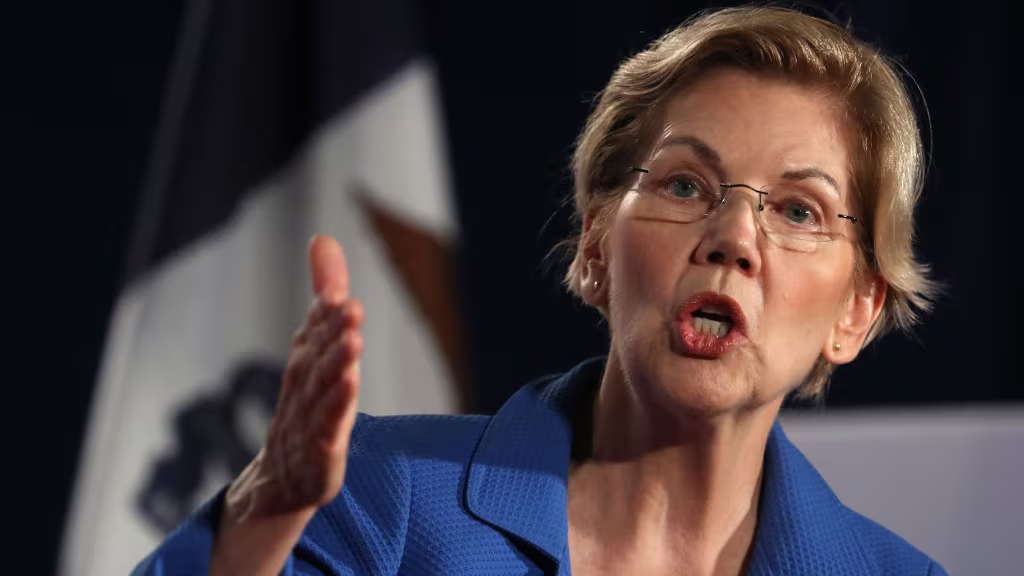
Elizabeth Warren’s Wealth Tax Plan: Simple Idea, Big Questions
The idea of taxing the ultra-rich has been gaining momentum in recent years. With rising inequality and growing government expenses, many politicians are looking for new ways to generate revenue.
One of the most talked-about proposals comes from Elizabeth Warren. Her plan, known as the Ultra-Millionaire Tax, aims to tax wealth directly—not just income.
At first glance, it sounds straightforward: the richer you are, the more you pay. But once you look deeper, things get much more complicated.
Let’s break it down in a simple and engaging way.
What Is the Ultra-Millionaire Tax?
A Tax Based on Wealth, Not Income
Most taxes today are based on income—what you earn each year from a job, business, or investments.
Warren’s proposal is different. It focuses on total wealth, also known as net worth. That includes everything a person owns, such as:
- Stocks and investments
- Real estate
- Businesses
- Luxury assets like art or jewelry
How the Tax Works
The plan is structured in two main tiers:
- Households worth between $50 million and $1 billion would pay a 2% annual tax
- Households worth more than $1 billion would pay a 3% annual tax
Anyone with less than $50 million in net worth would not be affected.
Real-World Examples
To understand how this works, let’s look at a few simple scenarios:
- A person worth $100 million would pay about $2 million per year
- A billionaire with $2 billion would pay around $60 million annually
- Someone worth $40 million would pay nothing under this plan
According to estimates, only about 260,000 Americans would be impacted—but the total revenue could be massive.
How Much Money Could It Raise?
A Trillion-Dollar Idea
Warren believes this tax could raise around $6.2 trillion over the next decade.
That’s a huge amount of money, and supporters say it could be used to fund major programs like:
- Affordable healthcare
- Housing initiatives
- Education improvements
In a time when governments are searching for ways to balance budgets and reduce inequality, this kind of revenue is hard to ignore.
Why Supporters Like the Idea
Targeting Extreme Wealth
One of the biggest arguments in favor of a wealth tax is fairness.
Many believe that the ultra-wealthy have accumulated massive fortunes while paying relatively low taxes compared to their overall wealth.
This isn’t necessarily because they are breaking laws—it’s because the current system mainly taxes income, not wealth.
Closing the “Wealth Gap”
Supporters argue that a wealth tax could help reduce inequality by redistributing some of the richest individuals’ fortunes.
It could also create a more balanced system where wealth contributes to public funding, not just earnings.
Addressing Tax Strategies Used by the Wealthy
Wealthy individuals often use strategies that allow them to minimize taxes. One commonly discussed approach is “buy, borrow, die,” where individuals:
- Buy assets that increase in value
- Borrow against those assets instead of selling them
- Pass them on to heirs without triggering major taxes
A wealth tax could limit the effectiveness of these strategies by taxing the value of assets each year.
A Moderate Approach Compared to Others
Interestingly, Warren’s proposal is seen as less aggressive than some alternatives.
For example, Bernie Sanders has supported higher wealth tax rates, including proposals as high as 5% for billionaires.
While a few percentage points may not sound like much, over time, they can significantly reduce large fortunes.
The Biggest Challenges Facing the Plan
While the idea sounds appealing to many, there are serious obstacles that could prevent it from becoming reality.
Legal and Constitutional Concerns
One major issue is whether a wealth tax would even be legal under the U.S. Constitution.
Unlike income taxes, which were authorized by the 16th Amendment, other types of taxes must follow strict rules about how they are distributed across states.
A wealth tax might not meet those requirements, which means it could face legal challenges if implemented.
The Problem of Valuing Wealth
Calculating income is relatively simple—you can track salaries, business profits, and investment gains.
But measuring total wealth is much harder.
For example:
- Stocks can change value daily
- Private businesses are difficult to price
- Real estate values vary widely
- Unique assets like artwork or collectibles may not have clear market prices
This makes it challenging to determine how much someone actually owes each year.
Enforcement Difficulties
Even if the tax is implemented, enforcing it would be a major challenge.
Wealthy individuals often have access to:
- Top financial advisors
- Legal experts
- Complex financial structures
These resources can be used to reduce tax exposure or challenge valuations.
Risk of Avoidance
Another concern is that wealthy individuals might try to avoid the tax altogether by:
- Moving assets overseas
- Creating trusts or corporate structures
- Renouncing citizenship
Warren’s plan includes measures like a 40% exit tax to discourage this behavior, but enforcement would still be difficult.
A Growing Trend in Tax Policy
Warren’s proposal is not happening in isolation.
There is a broader movement among policymakers to increase taxes on the wealthy.
Figures like Ro Khanna and emerging leaders such as Zohran Mamdani have also supported higher taxes on high-income or high-wealth individuals.
Some states are already taking action, introducing new taxes targeting millionaires.
This suggests that even if Warren’s exact proposal doesn’t pass, similar ideas may continue to gain traction.
What This Means for Everyday People
Most People Won’t Be Affected Directly
The vast majority of Americans would not pay this tax.
It only targets those with extremely high levels of wealth—far beyond what most people accumulate.
But Indirect Effects Could Be Significant
Even if you’re not directly impacted, policies like this can influence:
- Investment markets
- Business decisions
- Economic growth
Changes in tax policy often ripple through the entire economy.
A Reminder to Stay Informed
Whether you support or oppose a wealth tax, one thing is clear: tax policy is evolving.
Understanding these changes can help you make better financial decisions and prepare for potential shifts in the economic landscape.
Final Thoughts
Elizabeth Warren’s Ultra-Millionaire Tax is a bold attempt to rethink how wealth is taxed in the United States.
On one hand, it promises massive revenue and a way to address inequality. On the other, it raises serious questions about legality, practicality, and enforcement.
The idea may sound simple—tax the rich more—but the reality is far more complex.
As the debate continues, one thing is certain: conversations about wealth, fairness, and taxation are only going to grow louder in the years ahead.