


China Wants Its Own ASML: Tech Leaders Push for National Effort to Build Advanced Chip Machines
China’s semiconductor industry is stepping up its push for technological independence. Leading executives from some of the country’s biggest chip companies are calling for a coordinated national strategy to build advanced lithography machines — the crucial technology used to manufacture the world’s most powerful computer chips.
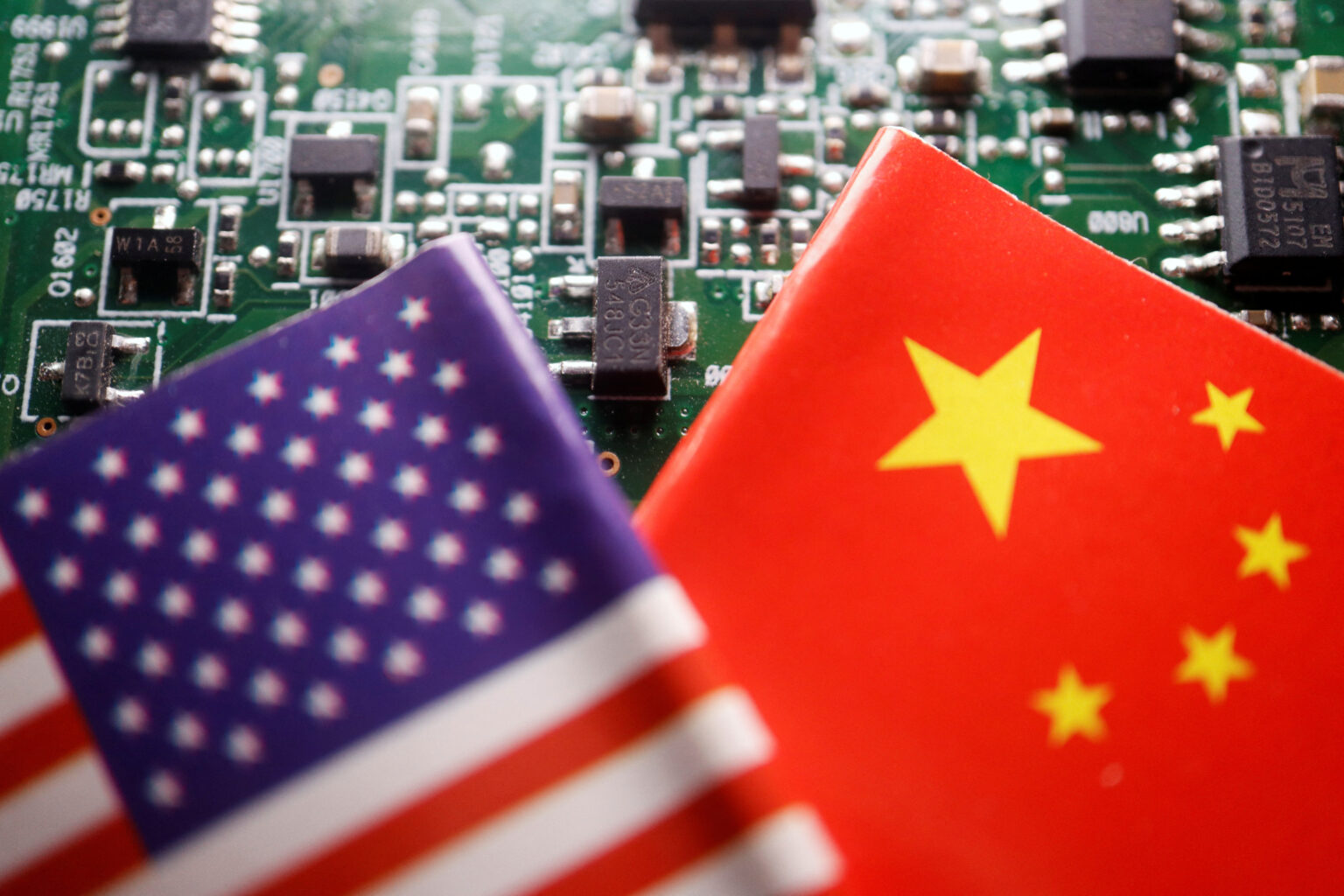
The proposal highlights how important semiconductors have become in the growing technology competition between China and the United States. As restrictions continue to limit China’s access to the most advanced chip equipment, industry leaders believe the country must combine its resources and talent to develop its own alternatives.
The goal is ambitious: create a Chinese version of the advanced chipmaking technology currently dominated by one company.
Why Lithography Machines Matter in the Global Chip Industry
Modern electronics depend on semiconductor chips. These tiny pieces of silicon power everything from smartphones and laptops to artificial intelligence systems and advanced military technologies.
At the heart of chip manufacturing is lithography — the process used to print incredibly small circuits onto silicon wafers.
The most advanced chips require a specific type of technology called extreme ultraviolet lithography. The only company currently capable of producing these machines at scale is ASML Holding.
These machines are considered some of the most complex manufacturing systems ever created.
What Makes EUV Lithography So Complex
An extreme ultraviolet lithography machine contains around 100,000 individual components and requires contributions from thousands of suppliers.
The system relies on:
- extremely precise optical systems
- powerful laser light sources
- ultra-stable wafer positioning stages
- specialized mirrors and lenses
- advanced software to control the process
Each of these technologies must work perfectly together to produce cutting-edge semiconductor chips.
Because of this complexity, only one company in the world has successfully integrated all these components into a working system.
Chinese Semiconductor Leaders Call for National Coordination
Three major figures from China’s semiconductor industry recently outlined their proposal in a joint article.
The authors include:
- Zhao Jinrong, chairman of Naura Technology Group
- Chen Nanxiang, chairman of Yangtze Memory Technologies Corp
- Liu Weiping, chairman of Empyrean Technology
Along with researchers from major semiconductor institutes, they argued that China must unite its resources to develop a complete lithography ecosystem.
Their message was clear: the challenge is too large for individual companies or laboratories to solve on their own.
Instead, they propose a national effort involving industry, government, and research institutions.
The China–U.S. Technology Rivalry
Semiconductors have become one of the central fronts in the broader technology competition between China and the United States.
Since 2020, Washington has imposed a series of export restrictions aimed at limiting China’s ability to produce advanced chips.
These rules focus particularly on preventing Chinese companies from manufacturing chips below the 7-nanometer process node — the level required for cutting-edge technologies such as artificial intelligence processors and high-performance computing.
A major part of these restrictions involves limiting access to advanced chipmaking equipment, including extreme ultraviolet lithography machines.
Because of this, China cannot easily purchase the technology needed to manufacture the most advanced semiconductors.
China’s Plan to Build Its Own Advanced Chip Ecosystem
Chinese semiconductor leaders say the solution is to create a fully integrated domestic supply chain.
They argue that China has already made progress in several important areas of EUV technology.
Areas Where China Has Made Progress
Researchers and companies in China have reportedly made breakthroughs in:
- EUV laser light sources
- wafer positioning systems
- optical components
- semiconductor manufacturing tools
However, these technologies currently exist in separate laboratories or organizations.
The biggest challenge now is combining them into a single working system.
In other words, China must build the integration capability that companies like ASML have developed over decades.
The Challenge of Building an “Integrated System”
Developing individual components is only part of the problem.
Lithography machines require extremely precise coordination between thousands of parts.
This integration challenge is what the executives say China must solve during its next national development plan.
China’s upcoming 15th Five-Year Plan, which covers the period from 2026 to 2030, is expected to focus heavily on semiconductor technology.
Industry leaders believe this five-year window will be critical for making major progress.
Key Technology Bottlenecks China Still Faces
The article also highlighted several areas where China still faces significant challenges.
These include:
Electronic Design Automation Software
EDA software is used to design semiconductor chips before they are manufactured.
Most of the world’s advanced EDA tools are produced by companies in the United States.
Without access to these tools, designing next-generation chips becomes far more difficult.
Semiconductor Materials
Advanced chip manufacturing also requires specialized materials, including:
- high-purity silicon wafers
- advanced photoresists
- specialty electronic gases
Many of these materials are currently supplied by companies outside China.
Precision Manufacturing Components
Lithography machines rely on extremely precise mechanical systems and optics that operate at near-atomic levels of accuracy.
Producing these components domestically is another major challenge.
China’s Current Position in Global Chip Manufacturing
Despite these obstacles, China has made significant progress in certain areas of semiconductor manufacturing.
According to industry estimates, China currently accounts for about 33 percent of global production capacity for chips manufactured using the 28-nanometer process node and older technologies.
These “mature nodes” are widely used in industries such as:
- automotive electronics
- industrial equipment
- consumer electronics
- power management chips
Importantly, these technologies are not subject to the same international restrictions as more advanced chip manufacturing processes.
This allows Chinese companies to continue expanding production in these segments.
A National Strategy for Future Chip Innovation
Chinese semiconductor leaders are proposing the creation of public technology platforms to accelerate research and development.
These platforms would allow researchers and companies to collaborate on next-generation chip technologies.
The goal would be to test and develop:
- new semiconductor device structures
- advanced manufacturing processes
- next-generation materials
- new equipment and components
- domestic EDA software solutions
By sharing infrastructure and expertise, China hopes to speed up innovation across the entire semiconductor ecosystem.
Semiconductors Become a Core National Industry
China’s government has already identified semiconductors as a key strategic sector for the country’s future.
In its latest government work report, Premier Li Qiang highlighted progress in domestic chip research and development.
The report listed semiconductors as a core pillar of emerging industries alongside:
- aviation and aerospace
- biotechnology
- low-altitude aviation economy
While the report did not specifically mention lithography machines, it emphasized the need to improve advanced manufacturing processes and accelerate the development of key equipment and materials.
The Long Road to Technological Independence
Building a fully domestic semiconductor ecosystem is one of the most difficult technological challenges any country can attempt.
The systems involved are extraordinarily complex, and decades of research and collaboration are required to perfect them.
However, China’s semiconductor industry is increasingly convinced that achieving this goal is necessary for long-term technological independence.
If successful, China could eventually reduce its reliance on foreign technology and strengthen its position in the global chip industry.
For now, the race to build a Chinese equivalent of ASML is only beginning.
The outcome could shape the future of the global technology landscape for decades to come.


