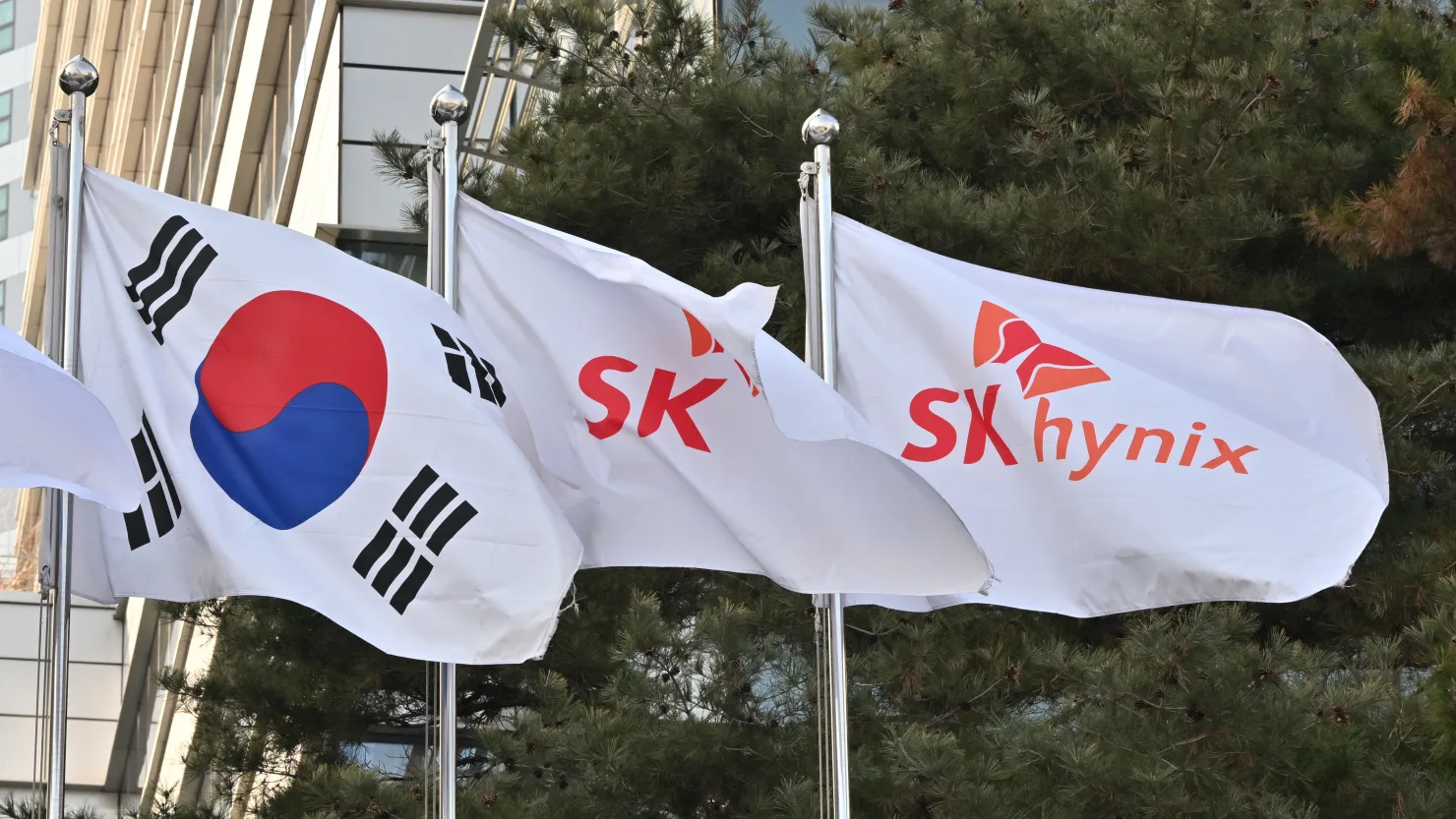
For the first time in history, SK Hynix has surpassed long-time rival Samsung Electronics in annual operating profit, marking a major turning point in South Korea’s technology landscape. The milestone reflects how artificial intelligence is reshaping the global semiconductor industry and rewarding companies that positioned themselves early in AI-focused technologies.
In 2025, SK Hynix reported record operating profits, driven largely by its dominance in high-bandwidth memory chips, a critical component used in advanced artificial intelligence systems. Samsung, while still a global tech giant, saw its profits diluted by the breadth of its business, which spans everything from smartphones to home appliances.
This shift highlights a new reality in the chip industry: specialization in AI hardware is becoming more valuable than sheer size.
A Historic First in South Korea’s Tech Sector
SK Hynix posted an operating profit of 47.2 trillion won for the full year of 2025, beating Samsung Electronics’ 43.6 trillion won. While Samsung remains larger in overall revenue and market capitalization, the profit comparison is symbolic.
Why This Moment Matters
Samsung has long been South Korea’s most powerful technology company, dominating semiconductors, consumer electronics, and mobile devices. SK Hynix, by contrast, has traditionally played the role of a strong but secondary memory chipmaker.
That balance has now shifted, at least when it comes to profitability. For investors and industry watchers, this signals that leadership in AI-related components can outweigh scale and diversification.
AI Memory Chips Fuel SK Hynix’s Rise
At the heart of SK Hynix’s success is high-bandwidth memory, often referred to as HBM. These advanced memory chips are essential for training and running large AI models, especially those used in data centers, cloud computing, and advanced graphics processing.
Dominance in High-Bandwidth Memory
SK Hynix has maintained a clear lead in the HBM market, supplying major AI chipmakers and benefiting from surging demand as artificial intelligence adoption accelerates worldwide. This focus allowed the company to capture higher margins and grow profits rapidly.
Unlike traditional memory products, HBM chips are complex, specialized, and harder to manufacture. That complexity has worked in SK Hynix’s favor, giving it a competitive edge over rivals that were slower to scale production.
Samsung’s Broad Business Becomes a Weakness
Samsung’s semiconductor division remains one of the most powerful in the world, but its business model is far more diversified than SK Hynix’s. While diversification can reduce risk, it can also dilute profitability during periods of rapid change.
Profits Spread Across Multiple Divisions
Samsung generates revenue from smartphones, televisions, displays, home appliances, and logic chips, in addition to memory. In 2025, gains from its memory business were offset by weaker performance in other divisions facing slower consumer demand and rising competition.
As a result, Samsung’s overall operating profit lagged behind SK Hynix, even though it continues to invest heavily in AI and advanced semiconductor technologies.
A Head-to-Head Earnings Week
The rivalry between the two companies was on full display this week, as SK Hynix released its earnings on Wednesday, followed by Samsung on Thursday morning local time.
Market Reaction and Industry Impact
The back-to-back announcements highlighted how differently the two companies are positioned for the AI era. Investors responded positively to SK Hynix’s results, seeing them as confirmation that its strategic focus is paying off.
For Samsung, the results served as a reminder that leadership in one era does not guarantee dominance in the next, especially as artificial intelligence reshapes technology priorities.
From Underdog to Industry Leader
SK Hynix’s rise is particularly striking when viewed through a longer historical lens. The company’s transformation began after it was acquired by SK Telecom in 2012 for approximately $3 billion.
A Strategic Bet That Paid Off
At the time of the acquisition, few would have predicted that SK Hynix would one day outperform Samsung in profits. Over the past decade, however, the company invested aggressively in memory innovation, manufacturing efficiency, and partnerships with global tech firms.
That long-term strategy has now positioned SK Hynix at the center of the AI revolution.
What This Means for the Global Chip Industry
The profit shift between SK Hynix and Samsung reflects broader changes across the semiconductor sector.
Specialization Over Scale
As AI workloads grow more complex, demand is rising for highly specialized components rather than general-purpose chips. Companies that focus on narrow but critical technologies, like HBM, are finding themselves in stronger negotiating positions with customers.
This trend could encourage other chipmakers to rethink their strategies, prioritizing depth of expertise over diversification.
Pressure Mounts on Samsung to Respond
Samsung is unlikely to accept second place without a fight. The company has already announced plans to expand its HBM production and strengthen partnerships with AI chip designers.
The Next Phase of Competition
While SK Hynix currently leads in high-bandwidth memory, the race is far from over. Samsung’s financial resources, manufacturing scale, and research capabilities give it the tools to catch up, if it can execute effectively.
The coming years are likely to see intensified competition as both companies vie for dominance in AI-driven semiconductors.
A Turning Point for South Korea’s Tech Identity
Beyond profits, this shift has symbolic importance for South Korea’s technology sector. For decades, Samsung has been the country’s flagship company, shaping its global reputation.
SK Hynix’s breakthrough shows that innovation and strategic focus can challenge even the most established players.
Looking Ahead
As artificial intelligence continues to reshape industries, the battle between SK Hynix and Samsung will be closely watched. For now, SK Hynix’s 2025 results mark a historic moment and underscore how quickly power can shift in the technology world.
The message is clear: in the AI era, the companies that master the most critical technologies stand to reap the greatest rewards.