


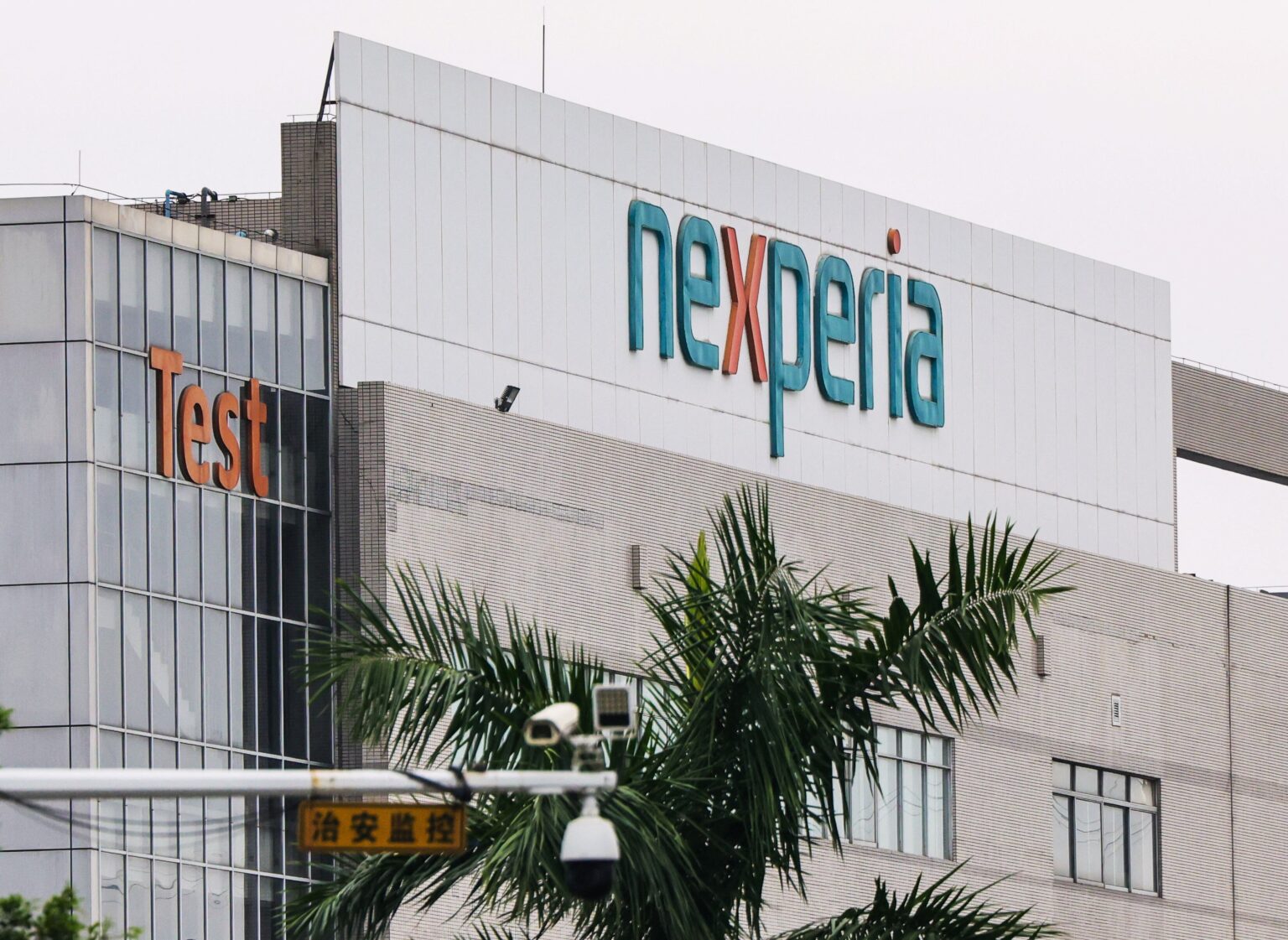
Nexperia China Begins Producing Its Own Chips as Corporate Dispute Continues
A major development in the global semiconductor industry is unfolding as Nexperia’s Chinese subsidiary has started producing its own chips. The move marks a significant step toward independence from its Dutch parent company and comes during an ongoing dispute that has already affected supply chains for automakers.
The announcement was shared through Nexperia China’s social media account on Monday. According to the company, it has started manufacturing several types of chips similar to those produced by Nexperia globally.
However, there is a key difference. The Chinese operation is using 12-inch wafers for production, a technology scale that the European division of Nexperia does not currently manufacture.
This development signals a deeper shift within the company and could reshape how semiconductor production connected to Nexperia operates in the future.
A Company Divided
Nexperia, originally headquartered in the Netherlands, has long been known as a major producer of semiconductor components used in a wide range of electronics and automotive systems.
Before the dispute began, the company followed a production structure that spanned multiple regions.
How the System Previously Worked
Under the original model:
- Wafers were manufactured in Europe
- Those wafers were shipped to China
- The Chinese facilities packaged and processed them into finished semiconductor chips
This global supply chain allowed the company to combine European manufacturing with China’s large-scale production capabilities.
However, this arrangement began to unravel in late 2025.
Government Intervention Changed Everything
In October 2025, the Dutch government intervened in the company’s operations.
The move was aimed at preventing Nexperia from shifting more of its operations and technology into China.
Authorities in the Netherlands reportedly viewed the transfer of advanced semiconductor production as a potential strategic and economic concern.
The intervention triggered a major internal dispute involving three key parties:
- Nexperia’s European headquarters
- Its Chinese subsidiary
- Wingtech, the Chinese technology company that owns Nexperia
What had once been a coordinated international operation soon turned into a standoff.
Nexperia China Declares Independence
Following the dispute, Nexperia China made a bold decision.
The Chinese subsidiary declared independence from the European division of the company. In response, Nexperia’s European leadership halted shipments of semiconductor wafers to China.
European management stated that the decision was due to unpaid invoices, claiming that the Chinese subsidiary had not paid for previously supplied wafers.
Without the wafers coming from Europe, the Chinese operations had to find another solution if they wanted to continue producing chips.
That solution appears to have arrived with the launch of independent chip production.
What Chips Is Nexperia China Producing?
According to its statement, Nexperia China has begun producing several types of basic semiconductor components.
These include:
Bipolar Discrete Devices
These chips are widely used in power electronics. They help manage electrical signals in devices ranging from consumer electronics to automotive systems.
Schottky Rectifiers
Schottky rectifiers are commonly used in power supplies and battery systems. They help convert alternating current into direct current with high efficiency.
Electrostatic Discharge Devices
These components protect electronic circuits from sudden electrical spikes that can damage sensitive hardware.
Although these are considered relatively simple semiconductor components, they are essential parts of countless electronic systems, including cars, smartphones, and industrial equipment.
Notably, these are the same types of chips that Nexperia has traditionally produced as part of its global operations.
The Importance of 12-Inch Wafers
One of the most interesting details in Nexperia China’s announcement is the use of 12-inch wafers.
Semiconductor wafers are thin slices of semiconductor material used to manufacture chips. The size of the wafer plays a crucial role in production efficiency.
Why Larger Wafers Matter
A 12-inch wafer allows manufacturers to produce significantly more chips in a single batch compared to smaller wafers.
This leads to:
- Lower production costs
- Higher manufacturing efficiency
- Greater scalability for large production runs
According to the company, the Dutch division of Nexperia currently does not manufacture chips using this wafer size in Europe.
That makes the Chinese production method particularly noteworthy, as it could offer certain manufacturing advantages.
Where Are the Wafers Coming From?
While Nexperia China confirmed it is using 12-inch wafers, it did not clarify exactly where those wafers are being sourced.
However, industry observers point to a potential connection with another company linked to Wingtech.
Wingtech founder Zhang Xuezheng reportedly controls a semiconductor fabrication facility in Shanghai called WingSkySemi.
This facility specializes in 12-inch wafer production and had previously cooperated with Nexperia before the dispute began.
Although no official confirmation has been provided, analysts believe this factory could be supplying the wafers needed for the new chip production.
Why the Dispute Matters for the Global Chip Industry
The conflict within Nexperia reflects broader tensions currently affecting the global semiconductor sector.
Semiconductors are essential components used in everything from smartphones and computers to vehicles and industrial machines.
In recent years, governments around the world have become increasingly concerned about where chips are produced and who controls the technology.
Countries are investing heavily in domestic semiconductor manufacturing to reduce dependence on overseas suppliers.
The Nexperia situation highlights how geopolitical decisions can influence corporate structures, supply chains, and technology development.
Potential Impact on Automakers
One of the industries most sensitive to semiconductor supply disruptions is the automotive sector.
Modern vehicles rely on hundreds of semiconductor components for functions such as:
- engine control systems
- safety features
- infotainment systems
- electric vehicle battery management
When semiconductor supply chains are disrupted, automakers can face production delays.
The internal dispute between Nexperia’s European headquarters and its Chinese subsidiary has already raised concerns among manufacturers that rely on these components.
If production becomes fragmented or supply lines shift significantly, automakers may need to adjust their sourcing strategies.
What Happens Next?
At this stage, it remains unclear how the dispute between Nexperia Europe and Nexperia China will ultimately be resolved.
The European headquarters has declined to comment publicly on the Chinese subsidiary’s latest announcement.
Meanwhile, the Chinese operation appears to be moving forward with its own manufacturing plans.
If Nexperia China continues expanding its independent production capabilities, the company could gradually develop into a separate semiconductor player within the global market.
For the broader industry, the situation serves as another reminder of how quickly the semiconductor landscape can change.
A Sign of a Changing Semiconductor World
The semiconductor industry is entering a period of rapid transformation.
Companies are restructuring their supply chains, governments are imposing new regulations, and manufacturers are racing to secure access to critical technologies.
Nexperia’s internal dispute and the emergence of independent chip production in China reflect this shifting environment.
What began as a disagreement over operations has now evolved into a potentially significant change in how one of the world’s semiconductor networks functions.
Whether the company eventually reunites its operations or continues on separate paths, the developments around Nexperia could influence how chip companies structure their global production strategies in the years ahead.


