Sam Altman Responds to Anthropic CEO as AI Industry Rivalry Escalates
The competition between two of the world’s leading artificial intelligence companies is turning increasingly public. OpenAI CEO Sam Altman has pushed back against criticism from Anthropic CEO Dario Amodei, asking his rival to “get his facts right” as tensions between the companies continue to grow.
The dispute has expanded beyond corporate rivalry and now involves government policy, national security concerns, and the future role of AI in defense systems.
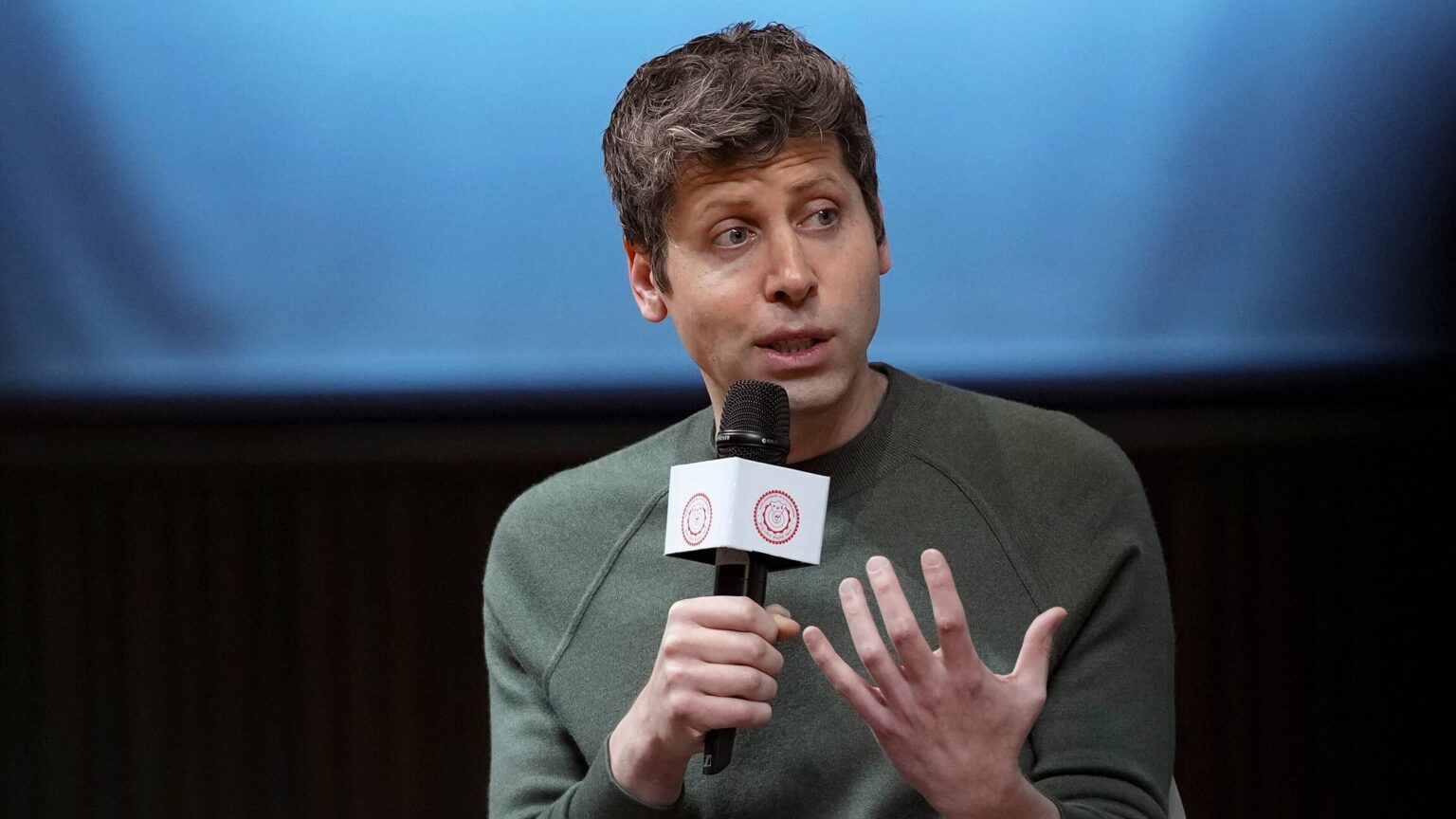
Speaking at the Morgan Stanley Technology, Media & Telecom Conference, Altman addressed the controversy and shared his views on the relationship between governments and powerful technology companies.
Altman emphasized that governments must always remain more powerful than private companies and warned that abandoning democratic processes could have serious consequences for society.
The clash between OpenAI and Anthropic highlights the intense competition shaping the rapidly expanding AI industry.
Why Sam Altman Says Government Power Must Come First
During the conference, Sam Altman made it clear that he believes governments should always maintain authority over private technology companies, regardless of how powerful those companies become.
He explained that it would be harmful for society if companies stopped supporting democratic institutions simply because they disagreed with the leadership in power.
According to Altman, technology firms have a responsibility to work within democratic systems rather than attempting to bypass them.
His remarks came shortly after criticism from Anthropic’s CEO regarding OpenAI’s relationship with the Trump administration and its growing ties with government agencies.
Altman’s response suggests he sees cooperation with government institutions as necessary for responsible development of artificial intelligence.
The Growing Conflict Between OpenAI and Anthropic
The disagreement between the two companies has been building for weeks.
Anthropic CEO Dario Amodei recently criticized Altman for what he described as being too supportive of political leadership. Amodei also suggested that Anthropic had avoided what he called “dictator-style praise,” while accusing Altman of doing the opposite.
These comments added fuel to an already tense relationship between the two AI companies.
OpenAI and Anthropic are both leading players in the race to develop powerful AI systems, and their competition has intensified as governments and corporations invest billions into artificial intelligence.
The latest conflict shows that the battle for AI leadership is not only technological but also political and ethical.
Pentagon Deal Adds New Pressure to the Rivalry
The rivalry escalated further when OpenAI signed a contract with the United States Department of Defense.
The deal came shortly after Anthropic failed to reach an agreement with the Pentagon over how its AI technology could be used.
Anthropic had reportedly requested safeguards that would prevent its AI tools from being used for domestic mass surveillance or autonomous weapons.
However, the Pentagon declined these restrictions.
When negotiations broke down, the Department of Defense later signed an agreement with OpenAI instead.
The timing of the deal sparked criticism from Anthropic’s leadership, who argued that OpenAI had accepted terms that raised safety concerns.
Sam Altman later admitted that the deal might have appeared “opportunistic and sloppy,” but said it was intended to reduce tensions and move forward with cooperation.
Government Action Against Anthropic Raises Concerns
The situation became even more complex when the U.S. government took direct action involving Anthropic.
Defense Secretary Pete Hegseth declared the company a “supply-chain risk to national security.” Shortly afterward, President Donald Trump ordered federal agencies to stop using Anthropic’s technology.
This sudden decision created major challenges for the company, which had previously worked with government agencies on AI-related projects.
The move also intensified the rivalry between Anthropic and OpenAI, as the latter quickly secured a deal with the Pentagon.
For many observers, the sequence of events illustrated how quickly political decisions can reshape the competitive landscape in the AI industry.
Anthropic’s CEO Criticizes OpenAI’s Pentagon Agreement
Following the Pentagon deal, Anthropic CEO Dario Amodei issued a strong internal memo to employees criticizing OpenAI’s decision.
According to reports, Amodei described the agreement as a potential safety threat.
He suggested that the key difference between the two companies was their priorities. In the memo, Amodei argued that OpenAI accepted the Pentagon’s terms because it wanted to avoid internal conflict with employees.
In contrast, he claimed that Anthropic rejected the deal because it wanted stronger protections against potential misuse of artificial intelligence.
Anthropic insisted on safeguards that would block its AI systems from being used for surveillance of citizens or autonomous weapon development.
However, these conditions were not accepted by the Department of Defense.
Anthropic’s Existing Military Contract
Despite the disagreement with the Pentagon over the new deal, Anthropic is not completely absent from military partnerships.
The company already holds a military contract worth approximately $200 million.
However, Anthropic has consistently maintained that certain limits should exist when it comes to how AI technologies are deployed in defense systems.
Its leadership has repeatedly emphasized the importance of responsible AI development and the need to prevent misuse.
This position reflects broader debates happening across the technology industry about how AI should be regulated and what role it should play in military operations.
The High-Stakes Competition in Artificial Intelligence
The dispute between OpenAI and Anthropic is also fueled by the enormous financial stakes in the AI industry.
Artificial intelligence has quickly become one of the most valuable and competitive technology sectors in the world.
OpenAI recently announced an enormous funding round of about $110 billion, pushing the company’s valuation to around $730 billion.
Meanwhile, its flagship AI platform ChatGPT has surpassed 900 million weekly active users, making it one of the fastest-growing digital products in history.
Anthropic is also experiencing rapid growth.
The company has reportedly reached an annual revenue run rate of around $19 billion, demonstrating strong demand for its AI models and services.
With billions of dollars in funding and major government contracts on the line, the rivalry between these companies is expected to intensify even further.
Ethical Questions Surrounding AI and Military Use
Beyond business competition, the debate between OpenAI and Anthropic reflects deeper questions about the role of AI in national security and defense.
Some technology leaders believe that AI companies should cooperate with governments to help maintain security and technological leadership.
Others argue that strict safeguards are necessary to prevent artificial intelligence from being used in ways that could threaten civil liberties or escalate military conflicts.
The disagreement between Altman and Amodei highlights these competing philosophies.
While OpenAI appears more willing to collaborate closely with government agencies, Anthropic has positioned itself as a company that prioritizes stricter safety boundaries.
The Future of the AI Industry
As artificial intelligence continues to evolve, tensions between major companies are likely to become more visible.
The race to build more powerful AI systems is attracting massive investments, government attention, and global scrutiny.
Companies like OpenAI and Anthropic are not only competing for technological leadership but also shaping the policies and ethical standards that will guide the future of artificial intelligence.
For now, the rivalry between Sam Altman and Dario Amodei shows no sign of slowing down.
As governments, corporations, and researchers continue to invest heavily in AI, the battle between these two companies could play a major role in determining how artificial intelligence is developed, regulated, and used in the years ahead.