COP30 Kicks Off in the Amazon — But Trump Isn’t Coming
The world’s most critical climate summit, COP30, has officially begun in Belem, Brazil — right on the edge of the Amazon rainforest. Delegations from nearly every country have flown in to tackle the escalating climate crisis.
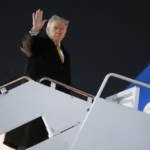
But one nation’s absence is impossible to ignore: the United States. President Donald Trump has decided not to send any senior officials, leaving a huge void at a summit that experts call crucial for the planet’s future.
The Climate Emergency Can’t Wait
The stakes have never been higher. Wildfires rage across continents, seas are rising, and extreme weather disasters are becoming the new normal. Yet, global attention has shifted to geopolitical tensions and trade wars, leaving urgent climate action at risk of being sidelined.
The Amazon rainforest — the world’s “lungs” — stands as a stark reminder of what’s at stake. Deforestation continues to accelerate, threatening the delicate balance of the planet’s climate system.
Trump’s No-Show Sparks Global Shock
Diplomats and environmental advocates are stunned. For the first time, the U.S. has opted out of sending senior representatives to a major climate summit, raising questions about America’s commitment to global climate leadership.
“This is unprecedented,” said a European delegate. “The world needs the U.S. at the table, yet here we are without them.”
Some analysts argue this could speed up progress, allowing other countries to take the lead. Others warn that without U.S. involvement, funding, and policy influence, global climate initiatives could stall.
Who’s Stepping Up?
With Washington absent, other nations are moving to fill the leadership gap. Brazil, under President Luiz Inácio Lula da Silva, is taking center stage, pledging to protect the Amazon and push for stronger climate commitments.
The European Union is pushing for aggressive emissions cuts, while China is balancing its coal dependency with massive investments in renewable energy. For vulnerable nations already facing climate disasters, the summit is a lifeline — one that cannot wait.
The Clock Is Ticking
The planet is perilously close to surpassing the 1.5°C warming threshold set by the Paris Agreement. Crossing that limit could unleash catastrophic changes — from irreversible sea level rise to the collapse of ecosystems worldwide.
Yet with political attention diverted and the world’s largest economy absent, the path forward looks more complicated than ever.
The Amazon Holds the Key
Belem, surrounded by rivers and dense rainforest, serves as a stark warning. The Amazon’s survival is critical not just for Brazil, but for the entire planet. Protecting it is no longer optional — it’s a matter of global survival.
“This summit isn’t just about discussions,” said a Brazilian official. “It’s about saving the future.”
Can the World Save the Planet Without the U.S.?
The big question looming over COP30 is whether global leaders can unite and deliver results without America’s support. Some believe Europe, Latin America, and Asia can take the reins. Others fear progress could falter without U.S. involvement.
One thing is clear: the world is watching, and time is running out.
The Bottom Line
COP30 may be defined more by what’s missing than what’s happening. Trump’s absence is a stark reminder of the political divisions threatening global climate action.
But the nations gathered in Brazil have an opportunity to prove that even without the U.S., the world can act decisively — before it’s too late.