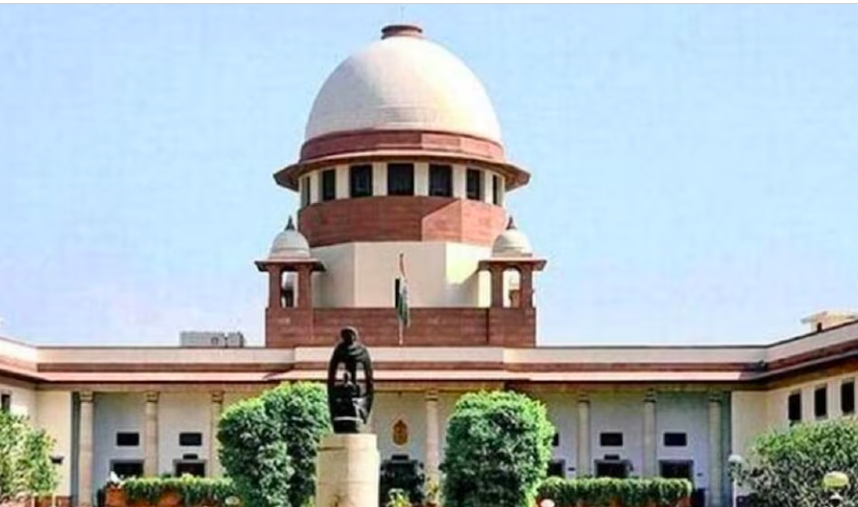
In a major breakthrough in one of India’s most high-profile terror cases, the Supreme Court of India on Thursday put on hold the Bombay High Court’s recent acquittal of all 12 accused in the 2006 Mumbai train bombings case. But the apex court made it clear that the acquittal would not be cancelled at the moment, and the released accused would not be re-arrested.
The court reiterated that the Bombay High Court judgment cannot be considered a precedent in another legal matter and clarified that its stay applied only to this part. “All respondents were released, and thus there is no question of bringing them back to prison.”. But on the point of law, we will hold that the impugned judgment is not followed as precedent in other cases. Thus, to that extent, there shall be a stay of the impugned judgment,” the Supreme Court bench added.
A Rare Legal Move
This directive comes a day after the Supreme Court itself commented that the stay on an acquittal would constitute an act of the “rarest of rare” kind. Courts typically avoid intervening in acquittals, particularly when they are on grounds of insufficient evidence. But the high court has done so here in this case, indicating the seriousness with which the issues being raised by the Maharashtra government need to be dealt with.
Solicitor General Tushar Mehta, who represented the Maharashtra government, submitted that the Bombay High Court judgment had far-reaching implications. He cautioned that the verdict could unravel the legal basis in other cases filed under the Maharashtra Control of Organised Crime Act (MCOCA), a crucial anti-terror law.
In response to this apprehension, the Supreme Court consented to hear the legal implications while assuring the acquitted persons that they would not be faced with any direct legal penalties or detention.
The 2006 Mumbai Train Blasts: A Grim Chapter
The case stems from a dark day in India’s modern history. On July 11, 2006, a series of seven coordinated explosions ripped through Mumbai’s suburban railway system during the evening rush hour. The blasts, which occurred in first-class compartments of trains on the Western line, killed 189 people and injured over 800. It was one of the deadliest terror attacks in India, deeply scarring the collective memory of the nation.
After a thorough probe, 13 were accused and put on trial. In 2015, a special court under MCOCA convicted 12 of them. Five were given the death penalty, while seven were given life imprisonment. One of the accused was acquitted then. The case went very slowly over the years within the judicial system. In 2021, one of the death-row convicts passed away from COVID-19-related complications.
Bombay High Court’s Shocking Reversal
Last week, a division bench of Justices Anil Kilor and Shyam Chandak of the Bombay High Court gave a judgment that shook many onlookers. The High Court reversed the special court’s 2015 verdict and acquitted all the remaining accused.
The judges declared that the prosecution had “utterly failed to establish offences beyond reasonable doubt” against the accused. The court pointed out glaring lacunae in the investigation conducted by the Maharashtra Anti-Terrorism Squad (ATS). Most importantly, it noted that the evidence of most prosecution witnesses was unreliable and incoherent.
In a scathing comment, the court also observed that the prosecution was unable to definitely establish the nature of the explosive used in the attack. These glaring oversights prompted the bench to state that the convictions were not sustainable on the stringent standard of proof in criminal cases.
Supreme Court’s Careful Balancing Act
With its recent order, the Supreme Court seems to be balancing precariously. It is, on the one hand, addressing the concerns of the Maharashtra government regarding the wider legal fallout of the High Court’s ruling. And it is, on the other hand, making sure that the principle of liberty is not sacrificed by instructing the re-arrest of the acquitted men.
The serving of notices on all 12 acquitted suspects indicates that the legal war is yet to end. The supreme court is likely to go deeper into the High Court’s rationale and the initial investigation to see if there is any room for revisiting the case.
Political and Legal Impacts
The news has already created political controversy. The initial 2006 probe had been acclaimed for its quick work, but in the intervening years, civil rights activists and lawyers had questioned the means employed, including complaints of custodial torture and coercion of confession. The Bombay High Court acquittal lent substance to these long-held doubts.
Now that the Supreme Court has intervened, the legal community will watch the case closely. If the top court eventually reverses the acquittals or grants a retrial, then it would have far-reaching consequences for how terrorist investigations and prosecutions are carried out in India.
Looking Ahead
As the legal drama goes on, the families of the victims are stuck in limbo. While most have expressed outrage and dismay at the acquittals, others claim they just need closure—no matter where justice goes. In the meantime, the government of Maharashtra is set to advance further arguments for its plea in the weeks ahead.
The Supreme Court decision to suspend the acquittal but not with immediate re-incarceration reflects a balanced way of thinking—maintaining the appeal right with regard for human liberty. But with such a high-profile case involved, the last say is still pending.