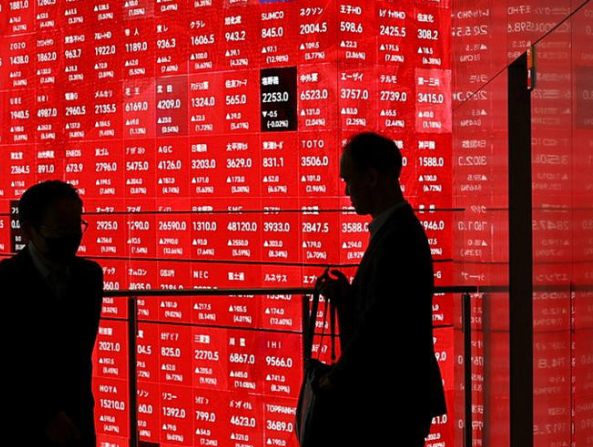
In a stunning rally that shook up Asian markets, Japan’s benchmark Nikkei 225 leapt 9.13% on Thursday to settle at 34,609. This is one of the index’s best one-day performances in years, fueled by investor euphoria following the announcement by former U.S. President Donald Trump of an interim reprieve on tariffs imposed on Asian exports. The top-weighted Topix index also jumped, climbing 8.09% to close at 2,539.40, reflecting broad-based optimism across industries.
The news, received late Wednesday, provided a dose of confidence to regional markets, unwinding recent losses that had been driven by concerns over surging trade tensions. Trump’s statement—given as a wish to “re-evaluate the effectiveness of the current tariff structure”—was greeted as a welcome de-escalation in the U.S.-Asia trade rhetoric.
Market Rebound Fueled by Tariff Relief
Japanese stocks were among the most severely affected in recent weeks as rumors circulated on another wave of U.S. tariffs that will hit Asian electronics, autos parts, and consumer products. Japan, being export-reliant, any shift in the tariff environment consequently impacts its corporate performance and overall economic direction.
“Markets were crying out for a spark, and the tariff timeout provided just the thing,” said Kenji Yamamoto, Tokyo Capital Markets chief equity strategist. “The explosive Nikkei rebound is a testament to not only relief, but also pent-up investor demand that had been waiting on the sidelines.”
Preeminently, industries most reliant on exports recorded the highest increases. Stocks of Toyota Motor Corp. spiked more than 10%, Sony Group appreciated 9.5%, and tech giant Panasonic jumped almost 12%. Even investors flocked into chip makers and suppliers, where Tokyo Electron surged more than 14% and Advantest rose by 13%.
Financial shares also helped the rally, with Mitsubishi UFJ Financial and Nomura Holdings both rising more than 7%. Analysts added that lower trade tensions could also ease pressure on the yen, which has been rising due to safe-haven demand, harming exporters.
Asian Markets Join the Rally
Japan’s ecstatic market reaction had a ripple impact across Asia. South Korea’s Kospi rose 5.4%, driven by leading performances in the semiconductor and shipbuilding industries. Taiwan’s Taiex index rose 4.9%, with TSMC and Foxconn both reporting strong gains.
Mainland Chinese equities also advanced, though less so. The Shanghai Composite gained 2.7% and the Shenzhen Component rose 3.1%, as Chinese investors tentatively embraced news of tariff relief but continued to fear wider geopolitical tensions.
Hong Kong’s Hang Seng index rose 3.8%, boosted by a rebound in tech stocks and hopes for better export prospects.
Today’s movement is a collective sigh of relief,” stated Priya Mehta, senior Asia economist at GlobalEdge Investments. “While the tariff pause is transitory, markets are taking it as an opportunity window for growth and negotiation. This change in tone, however fleeting, alters the near-term dynamics for many economies of the region.”
Global Implications and Investor Sentiment
Trump’s tariff halt comes as the U.S. business community increasingly worries about the inflationary effects of ongoing trade restrictions. Though the previous president fell short of completely repealing any of them, he showed a willingness to cooperate with Asian allies, which could signal possible space for diplomacy.
This might be a tactical pause or it could be ahead of the elections to temper hardening economic tailwinds–we will wait and see,” said Daniel Roberts, global strategy head at Atlas Financial. “For the meantime, the markets are responding to lower uncertainty positively.
Overseas investors answered with a renewed risk appetite, switching out of safe-haven investments such as gold and U.S. government bonds and into equities. U.S. stock index futures also edged higher in pre-market trading, reflecting a bullish carryover into Wall Street.
Japanese Economy Gets a Boost
The sharp surge in Japanese stocks is a relief for Prime Minister Fumio Kishida’s government, which has been struggling with stagnant consumer sentiment and a sluggish post-pandemic recovery from disruptions. A weaker currency had already been supporting export competitiveness, and the removal of tariffs could further support Japan’s GDP growth path.
“The timing couldn’t be better,” noted Yuki Matsumoto, senior analyst at Nikko Research. “We’re heading into a critical fiscal period, and improved trade dynamics could support both corporate profits and wage growth—two areas the government is targeting to sustain domestic demand.”
Japanese consumer sentiment had been deteriorating over the past few months under the pressure of increasing costs and economic uncertainty worldwide. Thursday’s stock market rally, though, could be a psychological watershed, stimulating expenditure and investment.
While the Thursday rally is undoubtedly eye-catching, analysts warn that the rally’s momentum will hinge on the duration of the tariff suspension and whether it paves the way for a more enduring solution.
“Still a lot of uncertainty,” said Yamamoto. “But if this Trump action whets the appetite for greater re-engagement with Asia, then today could be the start of a more prolonged bull run.”
Markets will be scrutinizing future announcements of U.S. trade policy and any other statements from Trump’s office concerning Asia-Pacific relationships. Meanwhile, investors are enjoying the relief from what has otherwise been a very prolonged period of volatility and negative sentiment.
With the trading week continuing, attention will also turn to Japanese and Chinese corporate earnings, which should give further clarity on how firms are coping with the changing environment of trade.