


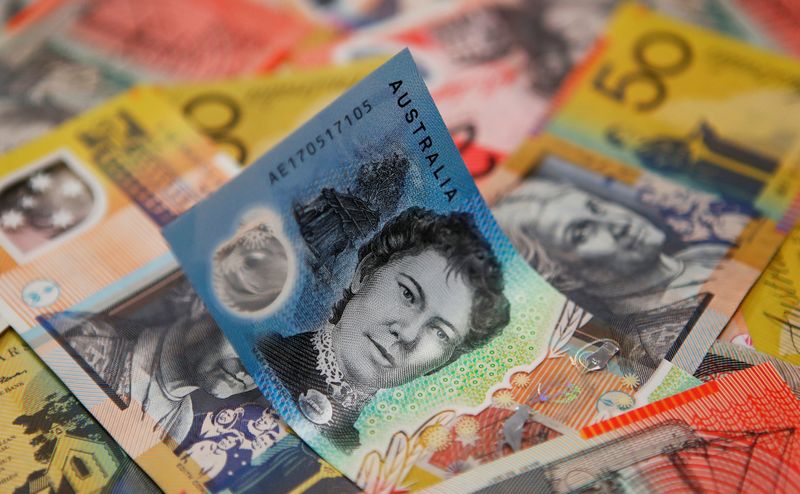
Australian and New Zealand dollars have found temporary respite on Wednesday ahead of the market reopening in China. Given the global currency markets remain extremely sensitive to trade tensions between the United States and China, all eyes are now on how the People’s Bank of China is going to manage the yuan midpoint rate.
Currency Markets Ready for China’s Move
Renewed trade war tensions initiated by former U.S. President Donald Trump have been resulting in significant volatility in the foreign exchange market. The latest move was the U.S. slapping steep tariffs on key trading partners, which included China, Canada, and Mexico. Despite negotiations that have delayed some tariffs, China retaliated promptly with countermeasures on U.S. imports.
China is next to keep analysts guessing closely at the setting of its daily yuan midpoint by the People’s Bank of China that fixes the yuan trading band allowed by Beijing. Offshore yuan fell as low as 7.3765 per dollar for the record last week before climbing a little this week. If China will need the lower value of yuan for export balancing because of its counteracting measure from tariffs imposed by Washington and its allies, this can become useful for that end.
Aussie and Kiwi Dollars Still Up
Given the close economic relationships between China and Australia, as well as between China and New Zealand, these two countries’ currencies sometimes are used as a proxy for the Chinese yuan in the foreign exchange market. The Aussie closed at $0.6251 yesterday after surging 0.47% on Tuesday, while the Kiwi reached $0.5648, which was up 0.44% overnight.
Carol Kong, a currency strategist at the Commonwealth Bank of Australia (CBA), commented on China’s potential reaction:
“What the PBOC does to the fixing today would tell us a lot about their stance on dealing with the trade war with the U.S. Our base case is that China will increase its tolerance for currency weakness in response to the U.S. tariffs. Whether or not the PBOC does that as soon as today remains in question.”
Global Currency Movements
While the Aussie and Kiwi did have a brief reprieve, other major currencies for the most part were little changed after their recent shudders:
The Canadian dollar rallied off its 22-year low to last at C$1.4333.
The Mexican peso firmed at 20.4910 per dollar after dropping to a near three-year low of 21.2882 earlier this week.
The British pound, or Sterling, is essentially flat at $1.2479.
The Japanese yen rose to 154.30 per dollar, while the dollar index was little changed at 108.04.
Despite rising trade tensions, market sentiment has been surprisingly resilient, said CBA’s Kong.
I was actually a little surprised by how resilient the markets have been. Risk sentiment has been fairly upbeat despite all of the tariff headlines and resumption of the US-China trade war. The upside is based somewhat on the US willingness to push back some tariffs as long as the rest of the countries would give him what he wants,”
Trade and Investments Influence
Global investors and policymakers are becoming increasingly uncertain due to the continued U.S.-China trade war. Given that China is the largest trading partner of Australia and New Zealand, any change in Chinese monetary policy or economic performance translates directly to the Australian and New Zealand dollars.
Short-Term Prospects
The Reserve Bank of Australia and Reserve Bank of New Zealand will mainly take cues from:
Chinese monetary policy decision on the yuan midpoint rate.
U.S.-China tariff discussions.
Global economic indicators, such as inflation and policies of interest rate from major central banks.
A weaker yuan can mean increased volatility for the Aussie and Kiwi as investors judge the economic implication of the trade war.
The Australian and New Zealand dollars were able to maintain their gains ahead of China’s reopening, but market uncertainty remains high. Traders and investors will be watching Beijing’s moves in the coming days to determine the future trajectory of the foreign exchange market. With trade war tensions still looming, any aggressive policy moves from China or the U.S. could trigger another wave of currency volatility.
Frequently Asked Questions (FAQs)
Why do the Australian and New Zealand dollars respond to China’s monetary policy?
The Australian and New Zealand economies are heavily dependent on trade with China. Therefore, changes in monetary policy of China, including the exchange rate of the yuan, cause some impact on the Aussie and Kiwi due to economic linkages.
Why is China’s yuan midpoint rate important for global markets?
The PBOC sets a daily midpoint rate for the yuan, which means it dictates what range the currency will trade. A weaker yuan makes Chinese exports more competitive and therefore affects global trade balances, affecting currencies such as the Aussie, Kiwi, and emerging market currencies.
Why did the U.S. impose tariffs on China?
The U.S. imposed tariffs on China based on the reasoning that the nation was not offering fair trade, it was committing intellectual property theft, and its trade balance was significantly skewed. This action sparked retaliation from China, making the trade war a two-way battle.
Are the Australian and New Zealand dollars going to continue being so volatile?
Yes, the volatility in the Australian and New Zealand dollars is likely to continue for as long as the trade tensions between the U.S. and China continue. Market sentiment, economic data, and monetary policy decisions will also influence currency fluctuations.
How can investors reduce risks in a volatile currency market?
Investors can hedge currencies, diversify, and monitor central bank policies to navigate the volatile currency markets. Keeping abreast of geopolitical developments and trade negotiations is also important for making informed decisions.


