


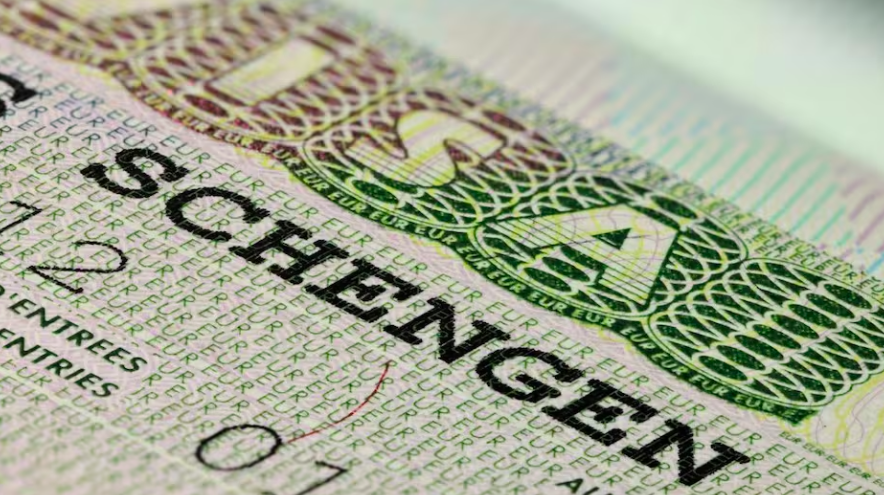
In a shocking instance of overseas travel scam, seven people from Gujarat were deported from Dubai and arrested at Mumbai’s Chhatrapati Shivaji Maharaj International Airport after officials found them with forged Schengen visas. The forged visas were aimed at facilitating the people’s entry into Luxembourg and possibly other Schengen nations under the false guarantee of jobs and settlement prospects.
The case came to light when Dubai immigration authorities picked up on irregularities in the travel papers during a routine search. The passengers — among them known individuals like Kaushikkumar Patel and Arthkumar Patel — were on their way to Luxembourg when they were stopped and deported back to India. Their entry caused an alert of sorts, and Mumbai immigration authorities called in the Sahar police for an investigation.
A Fraud Built on Aspirations
It was by a local agent called Kisan from Gujarat who made all the travel arrangements for all seven, according to police reports. The group was said to be enticed with the false promises that the documents issued to them — tourist and employment Schengen visas — would not just enable them to gain entry into Luxembourg but also settle and work without restriction in any of the 29 member countries of Schengen.
“Their tour was organized by an local agent, Kisan, from Gujarat. Tourist visas and counterfeit Schengen visas were handed over to them. In interrogation, they disclosed the agent provided them with information on how to travel and reside in European countries. The team is pursuing the agent who forged the visas now,” a Sahar police officer said to The Times of India.
The group’s fake documents claimed to be Luxembourg Employment Schengen Visas. However, upon inspection, these visas were found to be missing essential security features, rendering them counterfeit. This was confirmed by both Dubai immigration officials and Mumbai’s local police after the deportees were handed over for questioning.
The Discovery and Detainment
Mumbai Immigration Official Vishnu Sawant was one of the earliest to notice abnormalities in the arrival process. “While conducting check, I found seven people who were deported from Dubai with Dubai immigration visas marked,” Sawant stated. Dubai’s alert served as a red flag for the authorities at Mumbai airport, which immediately handed over the people to the Sahar police for further interrogation.
A thorough interrogation brought to light the extent of the racket: the group was assured unimpeded entry into jobs and residence in any of the Schengen nations. “During further interrogation, agents were said to have given them the visas and told them they could settle in any of the 29 Schengen nations without requiring permission to stay and could readily get employment,” Sawant elaborated.
This case is one of a growing number of concerns over fake immigration rackets in India. These scams target the hopes of people who are eager to search for better economic opportunities outside the country, especially in Europe, North America, and the Middle East. Vulnerable victims usually shell out large amounts of money to agents who assure them of authentic documents and jobs, only to find themselves cheated later on.
Authorities think that this case could be just one part of a much larger system of document fraudsters and travel agents targeting vulnerable people in smaller towns and cities. The fact that Luxembourg has been used as a target location can be strategic, considering the nation’s high employment rate and relatively lower supervision compared to other more popular destinations in Europe.
The authorities have initiated an intensive investigation to identify agent Kisan and his potential accomplices. “We are trying to trace the local network used to issue the fake documents. We think that this agent may have assisted others in the past or may also be active in circulating fake visas,” declared a senior police officer from the Sahar police station.
Call for Stricter Visa Checks
The incident has generated serious questions about the requirement of more robust checks during the visa issuing and verification process — both at source and at global checkpoints. The incident also emphasizes the necessity of public sensitization about the perils of being trapped by too-good-to-be-true travel packages by unauthorized agents.
Specialists in overseas travel and immigration recommend that Indian authorities, with the cooperation of European embassies and consulates, improve fraud detection systems and clamp down on indigenous agents taking advantage of legal loopholes. Training and technological advancements for immigration officials, accompanied by public awareness campaigns on the risks of illegal migration, could be critical first steps.
A Wake-Up Call for Aspiring Migrants
This case is one of warning for thousands of Indians who seek to emigrate in pursuit of a better life overseas. Foreign employment and settlement are so attractive that people are blinded by them, particularly when recommendations are made through unofficial sources or friends.
As the probe goes on, the seven are poised to incur additional legal ramifications under Indian law pertaining to forgery, fraud, and breach of immigration procedures. In the meantime, the authorities are unwavering in their pledge to destroy the web of deceitfulness orchestrated by nefarious agents such as Kisan.
This high-profile bust at one of India’s busiest airports might be just the tip of the iceberg, marking the calling for systemic changes in both public education and immigration law. For the moment, the message is clear: vigilance, verification, and lawful pathways are the only way forward.


