


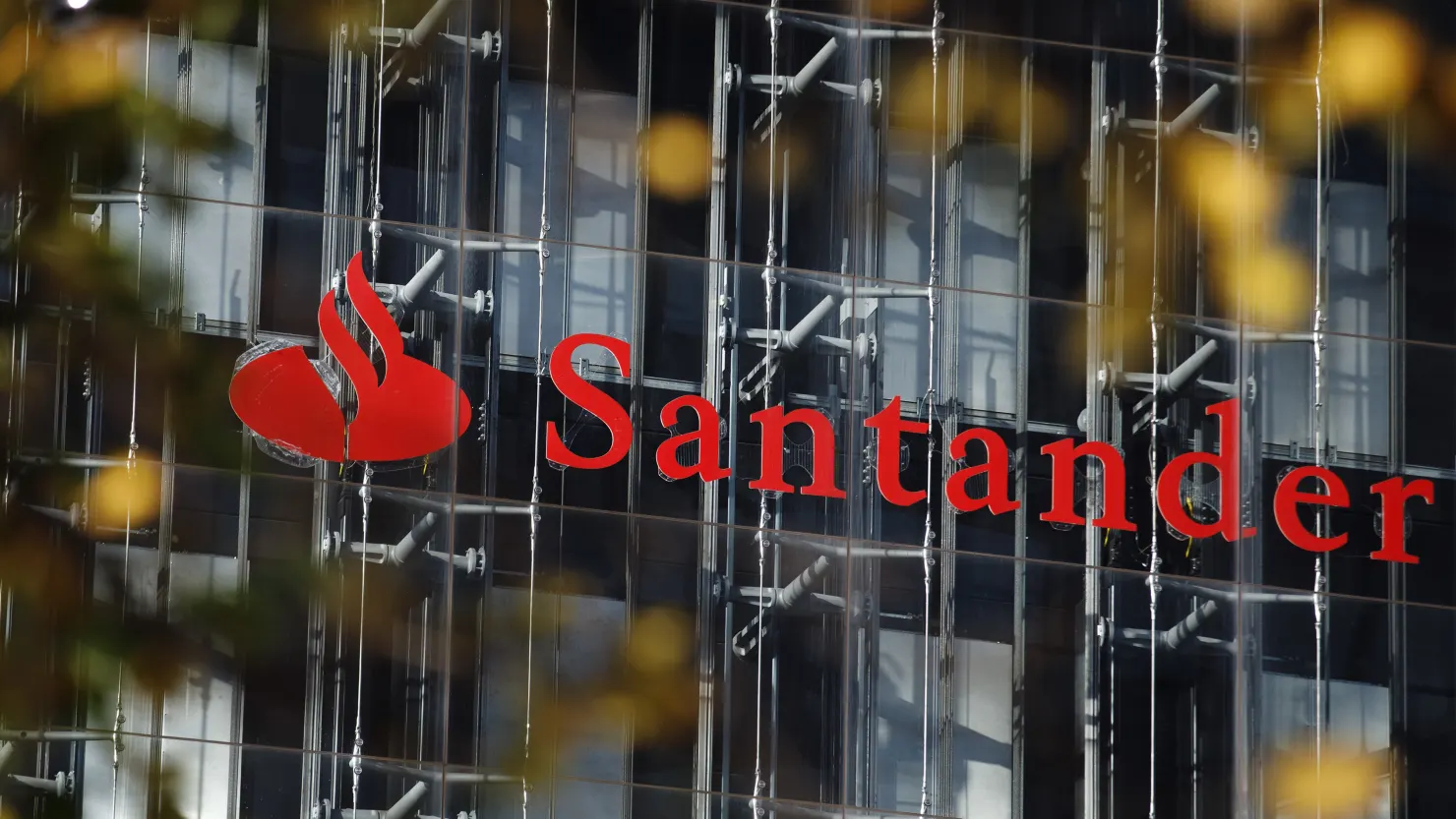
Swiss banking heavyweight UBS has officially lost its status as continental Europe’s most valuable bank, falling to Spain’s Banco Santander in a symbolic realignment that highlights the region’s precarious financial stability amidst increasing U.S. trade policies.
At Wednesday’s market close, UBS showed a market cap of 79.5 billion Swiss francs ($97.23 billion) based on data from FactSet. In contrast, the market value of Banco Santander spiked to 91.3 billion euros ($103.78 billion), firmly consolidating its position as continental Europe’s biggest bank giant.
The dramatic contrast between the two banking giants is largely a result of the different paths their share performances took in 2025. UBS has watched its shares fall by 17.2% so far this year, while Santander has recorded a close to 35% increase, data compiled by LSEG shows. The difference has become more marked in the months since the Trump administration’s latest bout of protectionist tariffs.
Trade Turbulence Reshapes the Financial Landscape
The turning point came on April 2, when U.S. President Donald Trump announced a new package of baseline and reciprocal tariffs aimed at several of Washington’s major trade partners — a move that shook global markets and sent shockwaves through European financial institutions with large exposures to global trade flows.
UBS was one of the worst affected. Being a globally diversified bank with significant exposure to global wealth management and investment banking, UBS is especially sensitive to global economic trends and geopolitical changes. The U.S. tariffs, in addition to declining global trade and investor skepticism, hit its valuation hard.
Banco Santander, on the other hand, has shown resilience, supported by solid performance in important emerging markets such as Latin America and comparatively solid retail banking operations in Spain and elsewhere in Europe. Though not spared from the wider macroeconomic tailwinds, Santander has been able to take advantage of opportunities offered by changing capital flows and regional market dynamics.
Sector-Wide Struggles
UBS and Santander are not the only ones struggling with the implications of the White House’s shift toward protectionism. European banks, having just emerged from a decade-long slumber after the Eurozone crisis, now face new pressures.
Slowdowns fueled by tariffs across European economies have dulled growth expectations, narrowed margins, and heightened the specter of a more widespread recession — especially if the U.S. economy, Europe’s largest trading partner to date, falls into contraction.
The European Central Bank has thus far maintained a prudent monetary stance, but increasing inflation and easing growth have presented a dilemma that provides scant room for maneuver. Bank profits are under duress as a consequence, and market confidence is still tenuous.
UBS’s deep exposure to the U.S. and Asia-Pacific economies makes it more susceptible to the twin stresses of trade tensions and weakening Chinese demand. By contrast, Santander’s concentration on Spanish retail banking and emerging markets with strong growth has insulated it — for now, at least — from the full impact of global upheaval.
A Strategic Shift?
For UBS, the loss of its crown could prompt a rethinking of strategy. The bank has already started to redefine its leadership and cost base after last year’s unpopular takeover of Credit Suisse, but experts say more radical repositioning could be needed to rebuild market confidence.
“There’s a feeling that UBS is at a crossroads,” said Bernstein European banking analyst Emilia Krauss. “Merging Credit Suisse was a bold gamble, but it’s had reputational costs and balance sheet woes. They’re going to have to get back to core strengths and provide clarity on growth priorities.”
At the same time, Santander’s ascension is part of a wider Spanish equity rally, driven by hope for structural reforms and fiscal prudence. CEO Ana Botín has been credited with guiding the bank through stormy waters through a mix of digital innovation, operational efficiency, and geographic diversification.
Yet, the way ahead is far from clear. Pundits caution that if American tariffs continue to rise or global growth decelerates more severely than anticipated, even Santander’s rising course may be at risk.
A Broader European Reckoning
The changing fortunes of Santander and UBS provide a microcosm of the challenges and changes sweeping through the European banking sector. Market observers point out that although capital positions are healthier than before, profitability continues to be contained by low interest rates, regulatory costs, and sluggish economic growth.
Questions also surround whether traditional models of the sector remain viable in a world defined by digital disruption, shifting consumer behavior, and rising geopolitical instability.
Some analysts believe that this could lead to a wave of consolidation, as mid-tier players seek scale to compete and larger banks seek to diversify geographically and technologically.
Banco Santander’s dethroning of UBS is not merely a move up the ranks — it symbolizes a reshuffling of a European financial hierarchy fueled by disrupted trade, geo-political angst, and economically uneven resilience. As both lenders navigate their future through this unsteady terrain, their capacity for adaptation, creativity, and the ability to endure global shocks will decide if they stay atop the heap — or become cautionary tales of failed opportunity.
With protectionism in the ascendant and economic headwinds building, the European banking industry is again at a crossroads. And as UBS and Santander have demonstrated, those that are slow to change may be left behind.


