“Ridiculous” or Revolutionary? The Growing Fight Over Data Centers in Space
Silicon Valley’s rivalry just reached orbit.
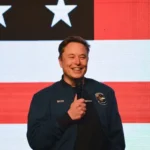
Elon Musk wants to build data centers in space. Sam Altman says the idea is nowhere close to reality.
The disagreement is the latest chapter in the long-running tension between the CEO of SpaceX and the CEO of OpenAI. And this time, the battleground isn’t artificial intelligence alone — it’s outer space.
Here’s what’s actually happening, why it matters, and whether orbital data centers are the future or just science fiction for now.
The Big Idea: Data Centers in Space
Data centers are the backbone of modern technology. They power artificial intelligence models, cloud computing, search engines, streaming services, and chatbots.
Right now, they’re built on Earth — and they’re massive.
But Elon Musk, through his rocket company SpaceX, has a far more ambitious vision: launching satellites that function as orbital data centers.
Elon Musk
SpaceX
SpaceX has reportedly discussed launching a constellation of up to a million satellites that would operate as computing hubs in orbit. The idea is to take advantage of abundant solar energy in space and potentially avoid some of the environmental and regulatory challenges that come with building giant facilities on Earth.
It’s a bold concept — and very on-brand for Musk.
But not everyone is convinced.
Sam Altman’s Blunt Response
Sam Altman
OpenAI
During a live event in New Delhi, Sam Altman didn’t mince words.
“I honestly think the idea with the current landscape of putting data centers in space is ridiculous,” he said, drawing laughter from the audience.
Altman clarified that he isn’t dismissing the idea forever. He simply believes the world isn’t technologically or economically ready.
He pointed to two major barriers:
- The extremely high cost of launching hardware into orbit
- The difficulty of repairing sensitive computer components in space
His bottom line: orbital data centers won’t matter at scale this decade.
Why Are Data Centers Such a Big Deal?
AI systems — especially large language models — require enormous computing power.
Every time someone uses a chatbot, generates an image, or runs a complex AI task, data centers are working behind the scenes. These facilities house thousands of high-performance chips and GPUs.
But they come with serious challenges:
Energy Consumption
Data centers consume staggering amounts of electricity. In many regions, they are straining local power grids.
Water Usage
Cooling these systems often requires massive amounts of water, which can impact local communities — especially in drought-prone areas.
Environmental Concerns
New data center projects frequently face opposition from residents worried about pollution, noise, and infrastructure stress.
In the United States alone, more than 1,200 new data centers were approved by the end of 2024 — nearly four times the number from 2010.
It’s no surprise tech leaders are exploring alternatives.
Musk’s Vision: A Solar-Powered Network in Orbit
Musk’s thinking is straightforward.
Space has:
- Virtually unlimited solar energy
- No local zoning restrictions
- No neighborhood opposition
- No dependence on fragile terrestrial grids
Instead of building giant, water-hungry facilities on land, why not move computing power into orbit?
SpaceX already launches thousands of satellites through its Starlink program. Expanding that capability into computing infrastructure seems like a natural extension.
Musk has reportedly mentioned orbital data centers in internal meetings at xAI, his artificial intelligence company. SpaceX has even begun hiring engineers tied to this vision.
It’s ambitious. But ambition and feasibility are two different things.
The Economics Problem: Launch Costs Are Still Massive
Launching hardware into orbit is expensive — even for SpaceX.
Current estimates suggest it costs millions of dollars to send just 800 kilograms into low Earth orbit. That’s a fraction of what a single AI rack weighs.
A modern AI server rack can weigh well over a ton — and that doesn’t include the supporting cooling systems, networking infrastructure, shielding, and structural components required to operate in space.
Even if launch costs decrease over time, the math is still difficult.
Altman’s point is simple: when Earth-based electricity is cheaper than rocket fuel, the economics don’t add up.
The Technical Challenge: Space Is Harsh
Even if cost weren’t an issue, there’s another obstacle.
Space is brutal on electronics.
Radiation in orbit can damage or degrade advanced chips. Today’s cutting-edge AI processors are not radiation-hardened. Building versions that can survive in space would require major redesigns.
And then there’s maintenance.
On Earth, if a GPU fails, technicians replace it. In orbit, fixing a broken chip becomes exponentially more complex and expensive.
Altman specifically highlighted this issue, noting that GPUs do fail — and quite often.
Until hardware becomes more durable and self-repairing systems improve dramatically, large-scale orbital data centers remain a technical gamble.
It’s Not Just Musk
Interestingly, Musk isn’t alone in thinking about space-based computing.
Sundar Pichai
Google
Google has reportedly explored solar-powered data centers in space through a project unveiled in late 2025. CEO Sundar Pichai has suggested the company could begin placing such infrastructure in orbit as early as 2027.
Meanwhile, other space-focused companies like Blue Origin have expressed interest in orbital infrastructure concepts.
This suggests the industry sees long-term potential — even if near-term implementation is unrealistic.
Why Musk and Altman Keep Disagreeing
The clash over space data centers is also symbolic.
Musk and Altman have had a complicated history. Musk was an early co-founder of OpenAI but later distanced himself from the organization. Since then, their approaches to AI development have diverged significantly.
Musk favors aggressive, large-scale infrastructure bets — whether electric vehicles, reusable rockets, or neural implants.
Altman tends to focus on scaling AI within current technological and economic constraints.
Their disagreement over orbital data centers reflects a deeper philosophical split:
- Musk pushes for moonshot infrastructure
- Altman argues for grounded practicality
Both perspectives have merit — but they operate on very different timelines.
Could It Eventually Work?
Altman didn’t say orbital data centers would never happen.
He said they won’t matter at scale this decade.
That distinction is important.
If launch costs fall dramatically, radiation-resistant chips become standard, and autonomous repair systems advance, space-based computing could make sense in the long run.
Solar energy in orbit is constant and abundant. Without atmospheric interference, solar panels can generate more reliable power. That alone is attractive in an AI-driven future where electricity demand keeps rising.
But today, those advantages are outweighed by cost and risk.
The Bigger Picture: AI’s Infrastructure Crisis
This debate highlights something larger.
AI’s growth is colliding with physical limits.
- Power grids are under pressure.
- Communities are pushing back against new data centers.
- Water shortages are worsening in some regions.
- Chip manufacturing is concentrated in a few global hubs.
As AI becomes more integrated into daily life, the demand for infrastructure will only increase.
Whether solutions come from nuclear energy, better chip efficiency, or — someday — space-based facilities, the conversation is only beginning.
Final Verdict: Vision vs Reality
Right now, Sam Altman appears to have the stronger practical argument.
Orbital data centers face enormous financial and technical hurdles.
But Elon Musk has built a career proving that “impossible” projects can eventually become reality.
Reusable rockets once sounded unrealistic. So did mass-market electric vehicles.
The real question isn’t whether space-based data centers are feasible today. It’s whether they become inevitable tomorrow.
For now, the idea remains bold, futuristic — and highly controversial.
One thing is certain: as AI continues to reshape the world, the battle over where and how we power it is just getting started.