Microsoft’s AI Hype Hits a Wall
Microsoft has spent years building its reputation as the dominant force in enterprise software. Windows, Office, Teams—every company needed them. So when Microsoft rolled out its AI-powered Copilot assistant as part of Microsoft 365, the expectation was simple: dominance in the enterprise market would translate into rapid adoption.
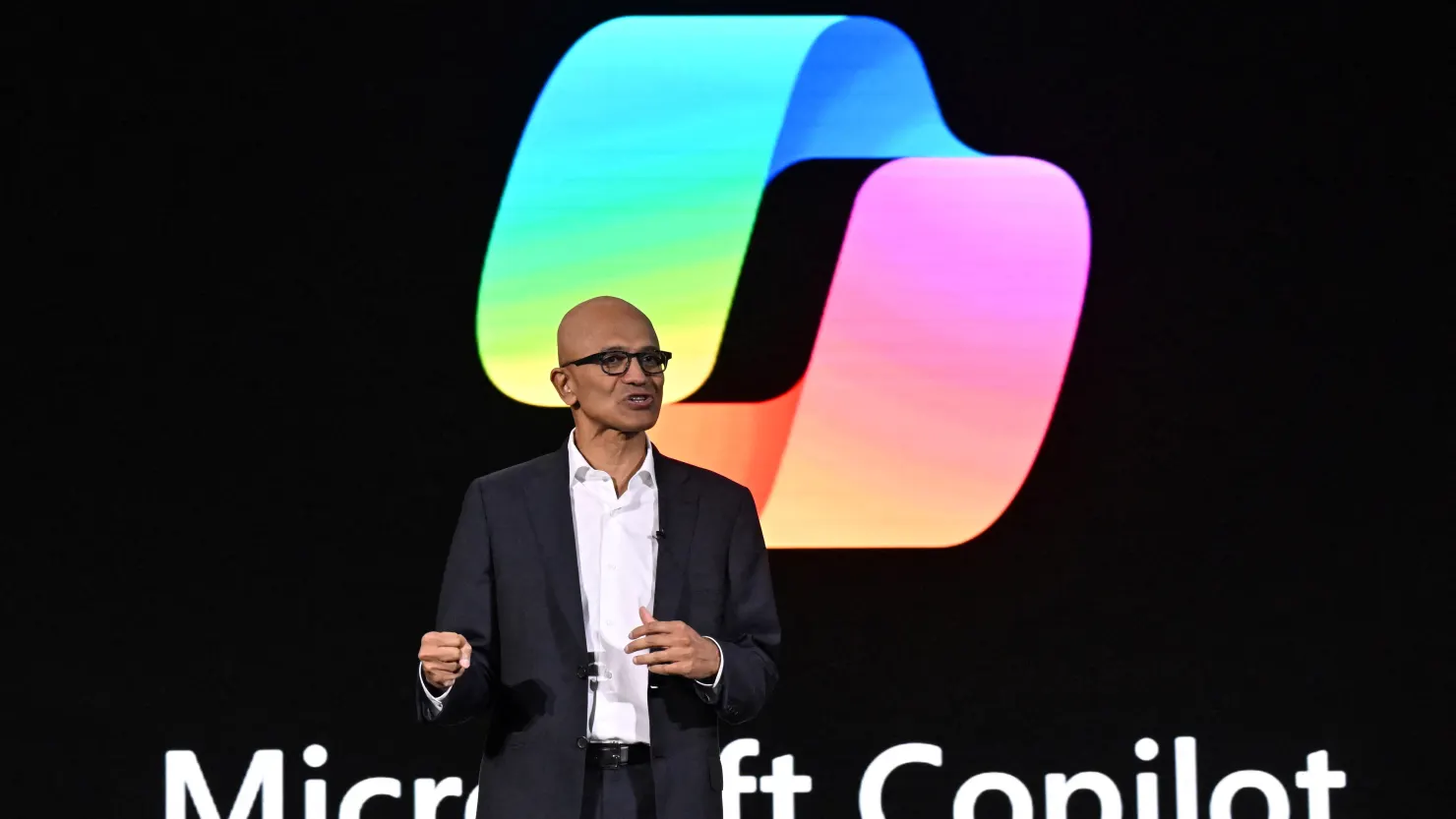
But reality is proving far more complicated. Conversations at Microsoft’s annual Ignite conference in San Francisco this week reveal that many IT leaders are skeptical, hesitant, or outright rejecting the AI tool. Despite CEO Satya Nadella’s claims of over 150 million Copilot users, the ground-level picture paints a far different story.
Copilot’s Big Promise
Two years ago, Microsoft launched 365 Copilot as an add-on to its Microsoft 365 productivity suite, priced at $30 per user per month. Copilot promised to transform productivity, assist with coding, handle cybersecurity tasks, and streamline enterprise workflows.
The marketing narrative was compelling: AI for everyone, integrated seamlessly with Office apps, ready to boost efficiency across the enterprise. Satya Nadella frequently boasts about Copilot’s reach and potential, framing it as the cornerstone of Microsoft’s AI strategy.
Yet, the actual adoption numbers, while impressive on paper, conceal a critical problem: many enterprise clients are hesitant to pay the premium, train employees, and integrate AI into daily workflows.
IT Buyers Aren’t Convinced
Adam Mansfield, a consultant with UpperEdge, put the issue bluntly: “Their sales reps actually now have to learn to sell.” Unlike other Microsoft products, Copilot isn’t an automatic yes for enterprise buyers. Sales teams have to convince IT leaders of the tool’s value—a process that hasn’t been easy.
Even more striking, Mansfield reports hearing from clients who actively want to reduce their Copilot licenses. “I know a lot of customers who are like, ‘Yeah, I want 300 to go to zero,’” Mansfield said, referring to companies cutting back or eliminating Copilot subscriptions entirely. “I don’t even want it,” some clients reportedly told him.
This is a dramatic shift for Microsoft. In the past, enterprise adoption was almost a given. Copilot, however, faces resistance that even a company with Microsoft’s scale cannot ignore.
Why Copilot Isn’t Winning Enterprise Hearts
Several factors are contributing to slow adoption and skepticism among enterprise IT buyers:
1. The Cost Factor
At $30 per user per month, Copilot isn’t cheap. Companies already paying for Microsoft 365 are reluctant to invest in an add-on that may not deliver measurable value. The expense is particularly noticeable for organizations with thousands of users.
2. Adoption Requires Training
Copilot is not plug-and-play. Employees need time and training to integrate it into their daily workflows. Many companies are already stretched thin with remote work, hybrid schedules, and other software training demands. Adding AI to the mix isn’t as simple as Microsoft’s marketing suggests.
3. Accuracy Concerns
AI isn’t perfect. Enterprises are worried about hallucinations, errors, or inaccurate outputs that could create legal, operational, or financial problems. For companies relying on precise reporting and sensitive data, this is a critical barrier.
4. Security and Compliance
Copilot interacts deeply with enterprise data. For regulated industries—finance, healthcare, government—the risk of sensitive data exposure is a major concern. Without strong guarantees and controls, IT leaders hesitate to roll it out broadly.
5. Questionable ROI
Even if Copilot works as intended, many companies don’t yet see the return on investment. Without clear metrics demonstrating time saved, improved productivity, or reduced workload, spending $30 per user per month is a hard sell.
The Disconnect Between Hype and Reality
Microsoft’s messaging paints a picture of an AI revolution: hundreds of millions of users leveraging Copilot to transform the workplace. But the feedback from IT buyers suggests the reality is far more nuanced.
Nadella talks about mass adoption and productivity breakthroughs. Meanwhile, enterprise clients are asking questions that marketing doesn’t answer:
- Is Copilot really worth the cost?
- Will employees actually use it effectively?
- Does it introduce new risks or compliance issues?
Until these questions are addressed, large-scale adoption is unlikely.
The Challenge Ahead for Microsoft
Microsoft faces a rare challenge. Historically, enterprise dominance meant nearly automatic adoption. Word, Excel, and Teams were standard. Copilot, however, isn’t a default. It’s optional, costly, and requires behavior change.
To succeed, Microsoft must rethink its approach:
- Prove ROI with clear metrics for time savings and productivity gains.
- Provide training and support to help employees use Copilot effectively.
- Address security concerns to reassure regulated industries.
- Consider flexible pricing to reduce the adoption barrier.
Without tackling these issues, Copilot risks being seen as a niche product rather than the enterprise-standard AI Microsoft envisioned.
The Bottom Line
Microsoft’s AI ambitions are massive. Copilot could revolutionize enterprise workflows, drive productivity, and cement Microsoft’s leadership in AI. But ambition alone isn’t enough.
The reality at Ignite makes it clear: enterprise clients aren’t automatically buying the hype. Some are hesitant, some are cautious, and some are outright rejecting the product.
The road to turning Copilot into a must-have AI tool for every office is steep. Microsoft has the technology, the resources, and the reach—but adoption will require convincing IT buyers that the benefits outweigh the costs, risks, and headaches.
Until then, the AI revolution in the enterprise may be happening… just not at the scale Microsoft promised.