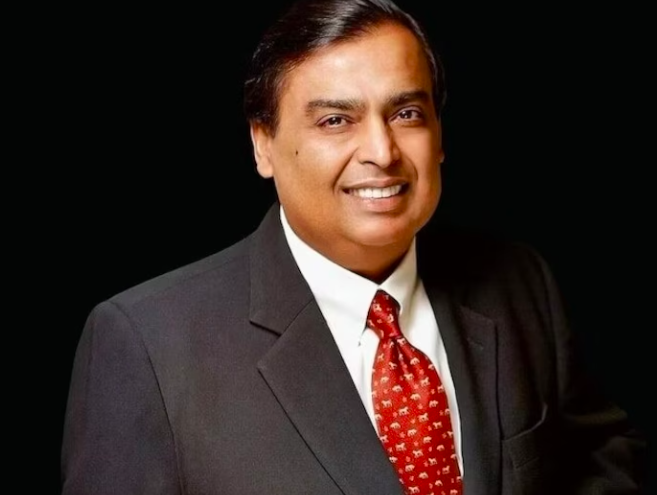
Mukesh Ambani has changed the game in telecom, retail, and digital services. Now, India’s most powerful business tycoon is coming for your money — literally. With the Securities and Exchange Board of India (SEBI) clearing four new passive funds for Jio BlackRock, Ambani’s bold foray into financial services is officially off the ground.
This is the start of what may prove to be one of the largest disruptions for India’s ₹72 lakh crore mutual fund market — and it’s led by a partnership built from its inception to bring wealth democratization.
A Global-Local Power Alliance
Jio BlackRock, announced in July 2023, is a 50:50 joint venture between Ambani’s Jio Financial Services and BlackRock, the world’s largest asset manager. With each party committing $150 million, the $300 million joint venture was born with a singular mission: to make investing in India simpler, more affordable, and deeply digital.
This is no run-of-the-mill partnership. BlackRock contributes its worldwide investing experience and in-house technology such as Aladdin — a robust portfolio management tool employed by institutional behemoths. Jio contributes scale, reach, and digital supremacy, with 475 million telecom users and more than 8 million users of its financial apps.
Investing Begins at ₹500: Mass Affordability Meets Digital Ease
At the heart of Jio BlackRock’s approach is accessibility. The new mutual fund schemes, beginning with four passive funds, will be completely digital — no need for old intermediaries in the form of agents or distributors.
Minimum investment? A paltry ₹500.
This low-entry point is key to Ambani’s ambitions of capturing India’s mass-market retail investors, especially in Tier 2 and Tier 3 cities. The funds will be distributed through Jio’s MyJio and Jio Finance apps, making it frictionless for users to invest, track, and manage their portfolios in real time.
By becoming completely digital, Jio BlackRock not only saves on costs of operation but also obliterates legacy inefficiencies — a feat that legacy players might not be able to emulate at scale.
Disruption Is the Name of the Game
Jio BlackRock isn’t coming into the mutual fund business to play by the old rules. It’s coming in to break them.
With ultra-low cost ratios — likely to plunge as low as 0.05% — Jio BlackRock is already sending out warning signals of a price war. Traditional mutual fund houses that usually charge anything between 0.5% to 2% may have to cut their fees or risk being irrelevant to those cost-savvy investors.
This cutthroat pricing, with better tech infrastructure and extensive digital penetration, provides Jio BlackRock with a competitive advantage that can rewrite market dynamics forever.
The Tech Powerhouse: Aladdin Joins the Fray
Perhaps the most under-estimated yet potent force in this venture is BlackRock’s Aladdin platform. Aladdin (short for Asset, Liability, Debt, and Derivative Investment Network) is a technology engine that marries advanced risk analytics with real-time portfolio insights.
Historically employed by elite institutional investors, Aladdin will now be accessible — indirectly — to ordinary Indian investors through Jio BlackRock passive funds.
This can radically change the way mutual fund investing is done by Indian users. From enhanced risk management to more effective rebalancing of funds, the development opens up a degree of sophistication heretofore available only to the ultra-rich or big institutions.
Beyond Mutual Funds: A Full-Fledged Financial Super App
Although the entry point is mutual funds, Jio BlackRock’s ambitions are a lot deeper. The firm will launch a full range of financial products and services that include:
Wealth management
Stock broking
Robo-advisory tools
Tax-saving investment products
Insurance distribution
Loan and credit offerings
These will all be brought into a single financial super-app — making Jio a destination for everything money. Imagine it as India’s version of Charles Schwab, Vanguard, and Robinhood combined — but with the power of Jio’s digital might.
With three debt funds already in the market and more than a dozen others lined up prior to the end of the year, the venture is gathering steam.
The Larger Picture: India’s Underpenetrated Investment Market
Even as India’s GDP continues to rise and its middle class expands, formal engagement in financial markets is still embarrassingly low. Fewer than 3% of Indians have investments in mutual funds. In contrast, more than 50% of American households own mutual fund assets.
The gap is a gigantic opportunity — and Jio BlackRock aims to be the vehicle that drives it.
By tapping into Jio’s huge telecom and digital presence, Ambani is best placed to bring millions of first-time investors onto India’s organized financial system. And with BlackRock’s international reputation, the trust barrier — a key hindrance in financial services — is greatly reduced.
Regulatory Green Light Is Just the Beginning
SEBI’s latest approval marks more than just a regulatory milestone. It signals that India’s financial watchdog is willing to welcome large-scale innovation — even if it comes with a touch of corporate disruption.
It also paves the way for a seismic transformation in India’s perception and utilization of mutual funds. Over the next few months, as Jio BlackRock launches its passive offerings and teaches users about cheap investing, the Indian consumer may well experience a significant financial behavioral shift.
Mukesh Ambani has remade each industry he’s ventured into — telecom, retail, streaming. And now, with complete regulatory approval, he wants to remake India’s investment arena.
With cheap capital, digital-first distribution, and institutional-grade tech, Jio BlackRock isn’t merely launching mutual funds — it’s opening up a financial revolution.
As India’s money game evolves, one thing is certain: Ambani is wagering big on Bharat — and this time, he wants to handle your money.