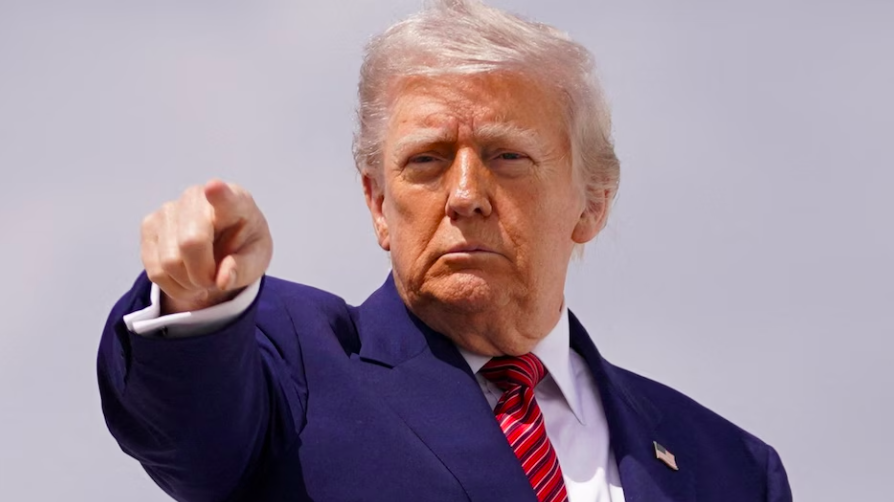
During a campaign stop earlier this week, Donald Trump reaffirmed his commitment to a “steel-first” approach, vowing to introduce a sweeping 50% import tariff on steel should he return to the White House. The announcement, which builds on prior tariff hikes during his first presidency, is meant to revitalize U.S. manufacturing and protect domestic jobs—an enduring theme in his economic policy platform.
Indian steel producers supply roughly 4% of U.S. steel imports, exporting over 500,000 metric tons annually to the American market, according to the Indian Ministry of Commerce and Industry. A 50% tariff would drastically erode the competitiveness of Indian steel, likely pricing it out of the U.S. market altogether.
“Given the magnitude of the proposed tariff, we expect a significant drop in Indian steel exports to the U.S.,” said Sandeep Jajodia, Managing Director of Monnet Ispat & Energy. “The industry must brace itself for a period of uncertainty.”
The Indian Steel Industry: Vulnerable to Global Shocks?
India, the world’s second-largest steel producer, has seen steady growth in exports, thanks to a combination of domestic production surpluses and buoyant international demand. In the fiscal year ending March 2024, India’s steel exports totaled $16.4 billion, with the U.S. ranking among its top five markets.
Past U.S. trade barriers—such as the Section 232 tariffs imposed in 2018, which set a 25% duty on steel—prompted India to seek alternative destinations for its steel amid escalating trade tensions. Experts warn that a 50% tariff could prompt a far steeper decline in exports, not only affecting domestic producers but also putting pressure on steel pricing and employment at home.
“Indian producers have diversified markets since the last tariff hikes, but the U.S. remains crucial for certain steel grades and high-value segments,” noted Jayanta Roy, Senior Vice President at ICRA. “If the tariff is implemented, the repercussions will be felt through lower utilization rates and squeezed margins.”
Reactions from Industry and Government
Industrial lobby groups, including the Federation of Indian Chambers of Commerce and Industry (FICCI), voiced concern over the U.S. move, calling for diplomatic engagement and exploration of mitigation strategies. The Ministry of Steel is reportedly coordinating with trade representatives to raise the issue with the U.S. administration and investigate possible remedies at the World Trade Organization (WTO).
“Increasing protectionism disrupts global trade flows and hurts both sides,” FICCI said in a statement. “We urge our government to engage with U.S. counterparts to seek a balanced solution.”
Indian government sources, speaking anonymously to Reuters, indicated that India may also look at bolstering incentives for domestic consumption and exploring new export markets, particularly in Africa and Southeast Asia.
Global Implications and India’s Next Moves
The prospect of higher U.S. tariffs does not only endanger India’s steel shipments—other major exporters like South Korea, Japan, and the European Union could also feel the pinch, potentially intensifying competition in global steel markets. Excess supply may push down international prices, putting further strain on Indian producers.
According to a World Steel Association report from May 2024, any contraction in U.S. steel imports resulting from tariffs could create a “domino effect,” with producers worldwide scrambling to find alternative buyers.
Secondary industries in India, especially auto parts and machinery manufacturing, could indirectly suffer from downstream impacts, if domestic steel prices fall or volatility increases.
Can India Offset the Losses?
Trade experts suggest that while India has limited immediate leverage with the U.S., long-term strategies could include:
- Negotiating sectoral exemptions or quota-based access similar to arrangements secured by Brazil and South Korea under earlier U.S. tariffs.
- Expanding free trade agreements (FTAs) with regions less susceptible to U.S. protectionism.
- Accelerating value addition by focusing on specialty and high-grade steel products less vulnerable to tariffs.
“The real challenge for India is balancing the goals of export growth and de-risking from overexposure to a few large markets,” said Shubhada Rao, founder of QuantEco Research.
Outlook: A Period of Transition Ahead
As the U.S. heads toward a high-stakes presidential election in November, India’s steel industry must prepare for a complex and potentially turbulent trade environment. The Modi government is expected to ramp up negotiations and policy support for exporters, while steelmakers revisit production and marketing strategies.
Analysts widely agree that while Trump’s 50% steel tariff seeks to address U.S. manufacturing woes, the move risks triggering a new wave of trade conflicts, undermining global economic stability. For India—already navigating volatile geopolitics and shifting supply chains—the challenge is to stay competitive and resilient in a world where open markets can no longer be taken for granted.