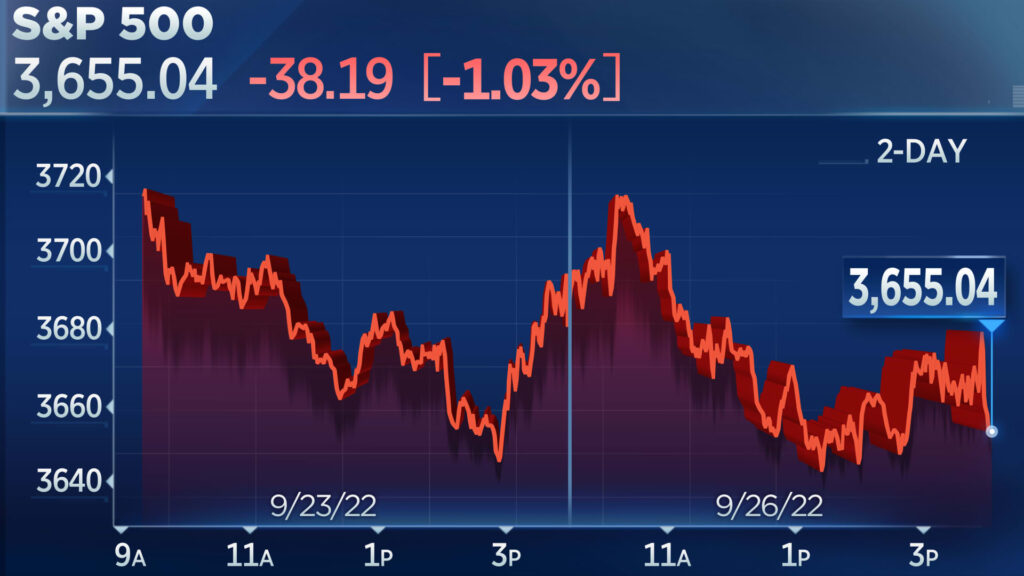
The U.S. stock market was volatile on Wednesday after inflation readings for January were hotter than anticipated, sending jitters that the Federal Reserve will hold off on interest rate cuts or, in the worst-case scenario, raise rates in the near term. The S&P 500 fell 0.27% to 6,051.97, with the Dow Jones Industrial Average losing 225.09 points, or 0.5%, closing at 44,368.56. The Nasdaq Composite fared a bit better, rising 0.03% to close at 19,649.95.
Market Reaction to Inflation Data
The main force behind the decline of the market was the Consumer Price Index (CPI) release, which reflected a 0.5% rise in prices for January. This placed annual inflation at 3%, beating economists’ prediction of a 0.3% monthly rise and a 2.9% yearly gain. Core CPI, which leaves out volatile food and energy costs, increased 0.4% in January and 3.3% in the last year, both higher than predictions.
These data increased investor concerns as they implied inflation might linger at elevated rates, making less likely the case for the Federal Reserve to impose rate cuts anytime soon. The 10-year Treasury yield that affects interest charges on mortgages, auto loans, and credit cards jumped to an intraday peak of 4.66% on the back of the report.
Federal Reserve’s Stance
In light of the hotter-than-expected inflation data, Federal Reserve Chair Jerome Powell testified before the House Committee on Financial Services, stating that while the Fed has made “great progress” in bringing inflation closer to its 2% target, “we’re not quite there yet.”
We want to remain policy tight at the moment,” Powell stressed. His comments were consistent with his testimony to the Senate Banking Committee the day before, in which he signaled that the Fed had no hurry to reduce interest rates.
President Donald Trump, on the other hand, expressed his backing of rate cuts, saying prior to the release of CPI data that interest rates need to be reduced. The Federal Reserve’s current position, however, indicates that rate cuts are still not in the cards in the near future unless inflation is seen to slow down more obviously.
Stock Market Performance
The inflation report had mixed effects on different parts of the market:
Technology Stocks: Megacap technology stocks including Amazon and Alphabet fell as concern over higher rates of interest suppressing future earnings expansion.
Consumer and Banking Stocks: Consumer and economically sensitive stocks such as large banks and retail businesses also fell because fear of widespread inflation may deter slower consumer purchases.
Auto and Pharm Stocks: The mood was slightly lifted by the words of House Speaker Mike Johnson, where he said that the White House was mulling reciprocal exemptions for tariffs on goods like automobiles and pharmaceuticals. The news assisted GM and Ford stocks to close in the plus column, as well as pharmaceutical giant Eli Lilly.
Tesla, Apple, and Palantir: Advantages from these technology stocks assisted in buffering the losses of the wider market.
CVS Health: CVS Health shares jumped almost 15% after the retail pharmacy chain beat analysts’ fourth-quarter earnings forecasts.
Investors’ Outlook
Wharton Professor Jeremy Siegel warned about so-called “Magnificent Seven” stocks, namely big tech powerhouses Apple, Amazon, and Microsoft. Siegel indicated those stocks have contributed to much of the market’s recent appreciation and that other parts of the market may start gaining ground in the future.
We have these two markets,” Siegel told CNBC’s Squawk Box. “We have the Mag Seven, which minus Tesla is trading at 30 to 35 times earnings, and then we have the remaining 493 stocks that are trading at more like 19 times earnings, which to me is very reasonable.
With inflation still above target and the Fed’s policy still restrictive, market volatility is seen by analysts continuing. Although there are investors expecting rate cuts towards the end of the year, the recent CPI reading makes it more probable that monetary policy easing will be pushed further back.

Frequently Asked Questions (FAQs)
Why did the stock market decline following the inflation report?
The market fell as inflation was hotter than anticipated, which led to fears that the Federal Reserve could postpone interest rate reductions or even increase rates further. Increased interest rates have a tendency to lower consumer and business spending, affecting corporate profits and stock prices.
What does the CPI report say about inflation?
The CPI report for January revealed a 0.5% increase in prices for the month, driving annual inflation to 3%. This was higher than what economists had expected and indicated that inflation is still stubbornly high, making it difficult for the Fed to reduce interest rates.
How did various stocks respond to the news of inflation?
Technology stocks such as Amazon and Alphabet fell because of fears of future growth with increased interest rates.
Consumer and banking shares also lost as inflation could reduce consumer expenditure.
Auto and drug stocks such as GM, Ford, and Eli Lilly gained on talks of tariff exemptions.
CVS Health rose by almost 15% after delivering robust quarterly profits.
What did Jerome Powell have to say about interest rates and inflation?
Federal Reserve Chairman Jerome Powell said that despite considerable progress being made in reining in inflation, it remains above the Fed’s 2% target. He stressed maintaining policy restrictive and signaled that cuts in interest rates are not around the corner.
What is the forecast for interest rates and the stock market?
With inflation still above target, the Federal Reserve is not going to deviate from its current policy. Rate cuts in the near term are less likely, and there is even speculation that the next move will be a rate hike. This uncertainty has the potential to create more stock market volatility in the months ahead.
Wednesday’s market response to the inflation report highlights the ongoing dilemma of reconciling economic growth, inflation management, and monetary policy. As investors ride out these stormy waters, staying up to date on inflation trends and Federal Reserve policies will be essential in making informed investment choices. Although some sectors remain resilient, the overall market will likely see choppy action as interest rate and economic growth uncertainty remains.