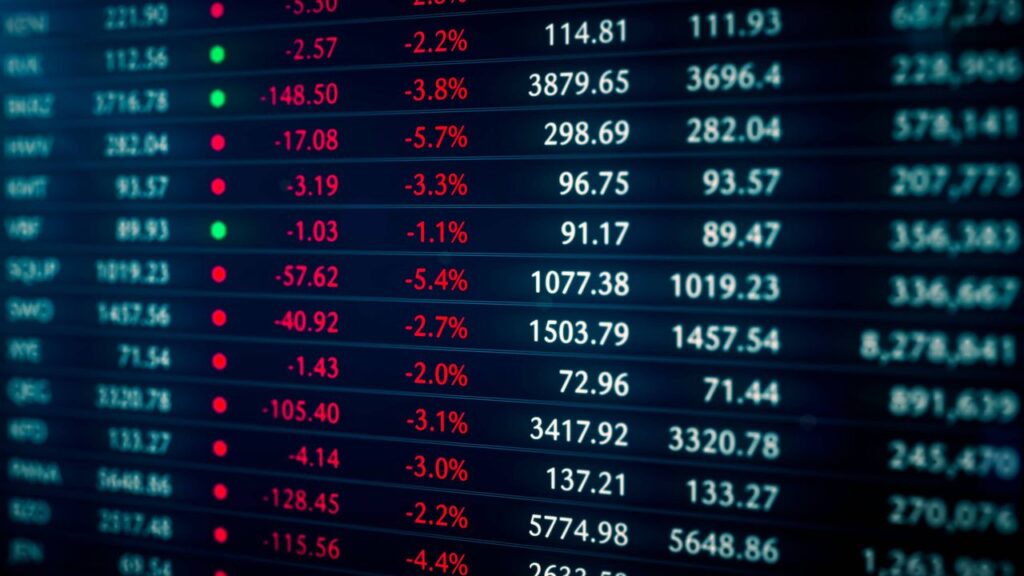
The U.S. stock market fell on Wednesday as new inflation figures showed a worse-than-anticipated increase in consumer prices, which is fueling worries about higher interest rates persisting for longer. The S&P 500 fell 0.2% in midday trading, and the Dow Jones Industrial Average fell 169 points, or 0.4%, at 12:47 p.m. Eastern Time. The Nasdaq composite was little changed. Earlier today morning, the S&P 500 fell as much as 1.1%, reflecting the market’s volatility towards economic news.
Inflation Fears and Market Response
Investors had closely followed the recent Consumer Price Index (CPI) report, which revealed that inflation is not decelerating as expected. The report showed that prices increased more than forecasted in major categories such as housing and energy. This surprise increase in inflation has increased concerns that the Federal Reserve might be compelled to sustain higher interest rates for a more extended period to manage price increases.
The inflation report has again sparked concerns that the Fed’s interest rate hikes, which are designed to tame inflation, may translate into slower growth in the economy and affect corporate profits. Borrowing costs, when they are higher, are likely to weaken consumer spending and business investment, thus negatively affecting stock market performance.
Effect on Major Indices
S&P 500: The benchmark index fluctuated during the session but was still in the negative side, indicating investor indecision.
Dow Jones Industrial Average: The blue-chip index dropped 169 points, mirroring declines in major industrial and financial stocks.
Nasdaq Composite: In contrast to the other indices, the Nasdaq, which is heavily weighted in technology stocks, was steady, with some technology stocks holding up well despite overall market worries.
Sectoral Performance
Technology Stocks: A few of the big technology names were able to weather the overall market decline. Large players such as Apple and Microsoft held up fairly well, as investors continue to view them as long-term growth prospects.
Financial Stocks: Banks and financial institutions declined as expectations of extended higher interest rates affected their outlook.
Energy Stocks: As expected, energy prices went up, and oil and gas stocks saw modest increases, since the inflation report indicated higher costs within the sector.
Consumer Goods and Retail: Retail stocks fared poorly as fears about consumer purchasing power increased as inflation persisted.
Federal Reserve’s Policy Implications
The Federal Reserve has also been vigorous in its monetary tightening efforts in the last twelve months with several rounds of rate hikes to choke inflation. The recent inflation figures indicate that the Fed cannot as quickly as expected by investors de-step its rate hikes.
Top Highlights from the Recent Federal Reserve Position:
The policymakers are determined to cut inflation to the 2% target rate.
Interest rates can stay high for a long time if inflation is persistent.
The Fed will keep an eye on labor market conditions and economic growth before deciding on further rate changes.
Investor Sentiment and Market Outlook
The sudden inflation hike has cooled the mood of investors, and their expectations are running high with enhanced volatility. Numerous investors are reconsidering their expectation of the next move by the Fed, as some experts project another interest rate increase by year-end.
Although the short-term worries are rampant, long-term investors might be able to catch a few stocks that have prospects in sectors known to perform favorably in the inflationary trend, including commodities and defensive equities.

FAQ: Understanding the Market Impact
Why did the stock market decline following the inflation report?
The market disliked the inflation report because elevated inflation levels imply that the Federal Reserve will maintain higher interest rates for a longer period. Rising rates hike borrowing costs, decelerate economic expansion, and affect corporate earnings, which can push stock prices down.
How does inflation affect the Federal Reserve’s actions?
Inflation drives the Fed’s monetary policy choices. The Fed will likely continue to increase interest rates in order to rein in price rises if inflation stays elevated. The Fed may decrease interest rates in order to stimulate economic growth, on the other hand, if inflation begins to recede.
What sectors are worst hit by high inflation?
Consumer goods, retail, and financial sectors are typically hit hardest by inflation. Rising costs lead to lower consumer spending, and higher interest rates reduce banks’ profitability. However, energy and commodity sectors often benefit from inflation as prices for raw materials rise.
What should investors do during volatile market periods?
Investors need to emphasize diversification, look to defensive industries such as utilities and healthcare, and have a long-term outlook. Keeping track of economic statistics and being aware of Federal Reserve policies can also aid in making wise investment choices.
Will the stock market bounce back from this inflation-fueled decline?
Whereas short-term fluctuation is predictable, the stock market has also always recovered from inflationary downturns. Recovery will be driven by future trends in inflation, monetary policy determinations by the Fed, and general economic activity.
The newest inflation information has brought added uncertainty to the American stock market, sending Wall Street faltering. Investors are now facing the threat of sustained higher interest rates, which will act as a drag on economic growth and corporate profitability. While volatility in the markets prevails, staying well-informed and embracing a diversified investment approach will prove to be essential in weathering these uncertain times.