


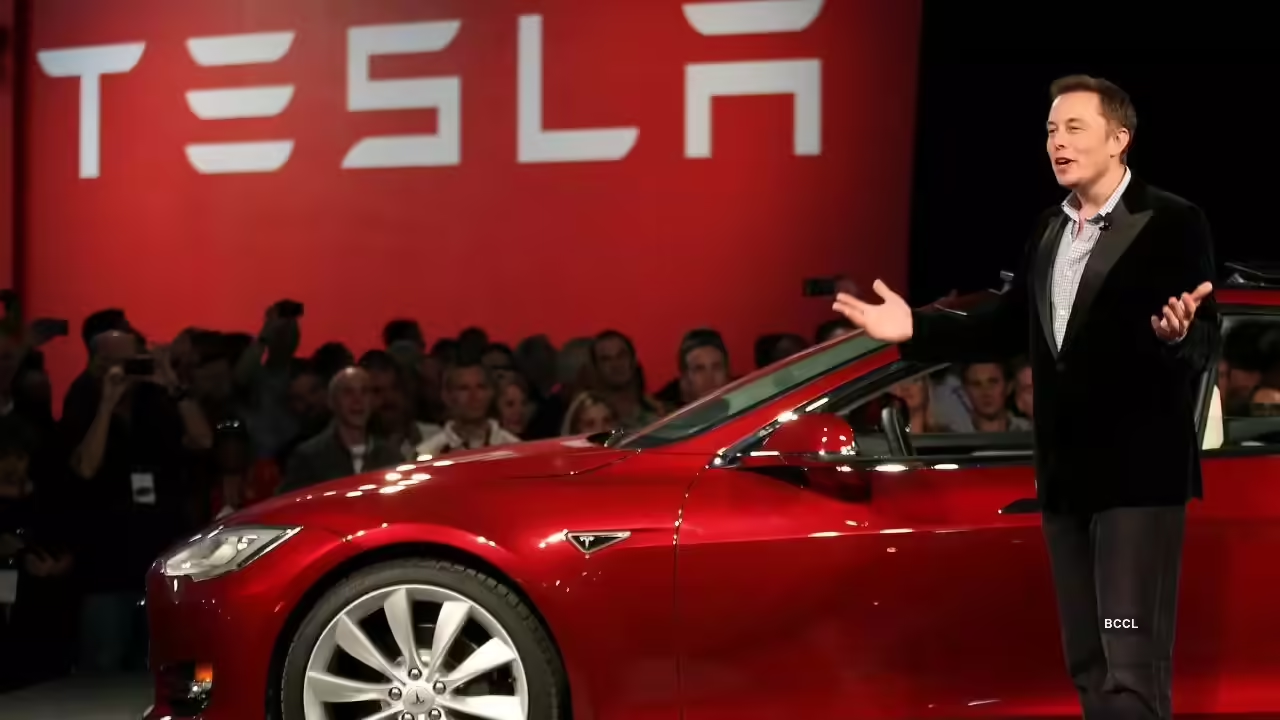
Tesla’s $2.9 Billion Solar Gamble: Why Elon Musk Is Turning to China
In a surprising yet strategic move, Tesla is reportedly planning to spend nearly $2.9 billion on solar manufacturing equipment—and much of it could come from China.
At first glance, this may seem contradictory. The United States has been trying to reduce its dependence on Chinese manufacturing. Yet, as Elon Musk pushes forward with an ambitious solar expansion plan, China still appears to play a critical role.
So what’s really going on? And why is Tesla betting big on solar right now?
Tesla’s Big Goal: 100 Gigawatts of Solar Power
Tesla is not thinking small. The company wants to build enough solar manufacturing capacity to generate 100 gigawatts of power in the United States by 2028.
To put that into perspective, that’s a massive chunk of the country’s current solar capacity.
Musk has even suggested that solar energy could eventually meet all of America’s electricity needs. That includes rising demand from data centers, factories, and emerging technologies.
Why This Matters
- Electricity demand is rising fast, especially with AI and data centers
- The US is facing potential energy shortages
- Solar is one of the fastest ways to scale clean energy
Tesla’s plan is not just about sustainability—it’s about future-proofing energy supply.
Why Tesla Is Buying Equipment from China
Despite political tensions and trade barriers, Tesla is reportedly in talks with several Chinese companies to supply key manufacturing equipment.
Key Potential Suppliers
- Suzhou Maxwell Technologies
- Shenzhen SC New Energy Technology
- Laplace Renewable Energy Technology
Among them, Suzhou Maxwell stands out as a global leader in solar cell production machinery.
The Reality: China Still Leads
Even though the US wants to build its own solar industry, there’s a major challenge:
China dominates the global solar manufacturing supply chain.
Many American companies simply don’t have alternative suppliers for advanced equipment. That’s why Tesla is looking overseas—even while building factories on US soil.
A Race Against Time
According to sources, Tesla wants the equipment delivered by autumn, with shipments likely headed to Texas.
That suggests the company is moving fast.
Why the Urgency?
- Rising electricity demand across the US
- Increasing pressure to scale clean energy
- Competition from other tech and energy companies
Musk is known for setting aggressive timelines, and this project is no exception.
The Trade-Off: Independence vs Practicality
Tesla’s move highlights a bigger issue facing the United States.
On one hand, there’s a strong push to reduce reliance on China. On the other, building domestic manufacturing requires tools that currently come from… China.
A Complicated Reality
- Solar panels and equipment are cheaper and more advanced in China
- US tariffs restrict imports of finished solar products
- But equipment for manufacturing is still allowed
In fact, the US government made a key decision in 2024 to exclude solar manufacturing equipment from tariffs. That exemption is still in place.
Without it, companies like Tesla would struggle to build solar factories domestically.
Musk vs Policy: A Clash of Energy Visions
Elon Musk has openly criticized tariffs and policy decisions that make solar energy more expensive.
He argues that these barriers artificially increase costs at a time when the country needs more power.
A Different Approach
Musk’s vision focuses on:
- Rapid solar expansion
- Lower energy costs
- Scaling clean energy quickly
This contrasts with policies that prioritize fossil fuel production or limit renewable subsidies.
The difference in approach highlights an ongoing debate about how the US should meet its future energy needs.
The Bigger Picture: America’s Energy Demand Is Surging
The timing of Tesla’s solar push is not random.
US electricity consumption has already hit record highs and is expected to keep rising over the next few years.
What’s Driving Demand?
- AI and data centers
- Electric vehicles
- Industrial growth
- Digital infrastructure
Solar energy is one of the few solutions that can scale quickly enough to meet this demand.
Can Tesla Actually Deliver?
While the vision is bold, there are valid questions about execution.
Setting up 100 gigawatts of solar manufacturing in just a few years is a massive challenge.
Potential Challenges
- Supply chain delays
- Regulatory approvals (especially from China)
- Infrastructure and workforce requirements
- Musk’s history of ambitious timelines
Tesla has made big promises before—some delivered, others delayed.
This project will test the company’s ability to turn vision into reality.
Tesla’s Ongoing Dependence on China
Even as Tesla pushes for local manufacturing, China remains deeply embedded in its supply chain.
The company reportedly works with around 400 Chinese suppliers, many of whom help keep costs low.
Some of these suppliers even support Tesla’s global operations, not just US production.
A Balancing Act
Tesla is trying to:
- Build more in the US
- Reduce costs
- Maintain efficiency
But for now, cutting ties with China completely isn’t practical.
Final Thoughts: A Bold Move with Big Implications
Tesla’s $2.9 billion equipment plan is more than just a business deal—it’s a glimpse into the future of energy and manufacturing.
It shows how:
- AI and energy demand are reshaping industries
- Clean energy is becoming a strategic priority
- Global supply chains are still deeply interconnected
Elon Musk is betting that solar power will be the backbone of tomorrow’s energy system. And to build that future, he’s willing to work with the very country the US is trying to move away from.
Whether this strategy pays off or backfires remains to be seen. But one thing is clear: the race for energy dominance is just getting started.


