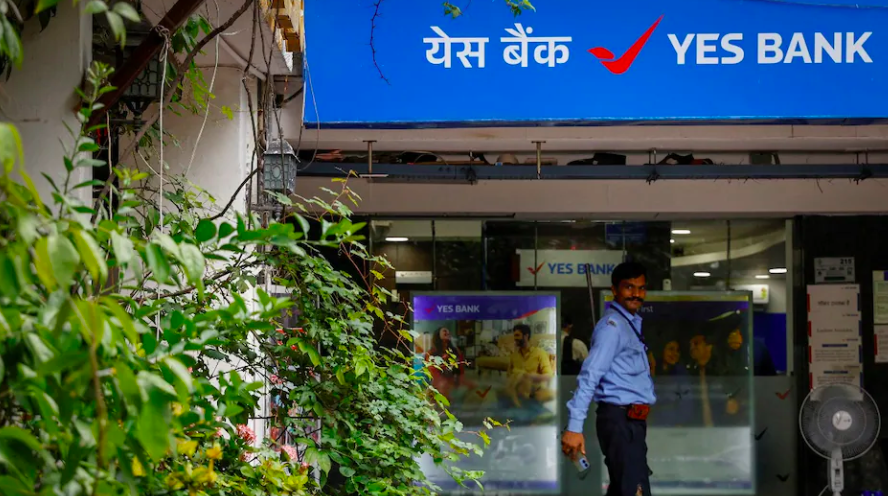
Despite the headline numbers, YES Bank shares dropped as much as 7.5% to ₹23.60 on the BSE on Friday before partially recovering. The market reaction was largely attributed to a sequential fall in net interest margin (NIM) — a measure of lending profitability.
For Q1FY25, YES Bank’s NIM contracted to 2.4% from 2.5% in the previous quarter, reflecting higher funding costs and a shift in the loan mix, analysts said.
“While earnings momentum is positive, narrowing NIMs and slow advances growth remain key concerns,” said Suresh Ganapathy, BFSI analyst at Macquarie Capital. “The market expects sustainable and broad-based improvement, especially on the margin front.”
The bank’s advances rose by a modest 9% year-on-year to ₹2.21 lakh crore, slower than peers’ average double-digit growth. Deposits grew 10% to ₹2.40 lakh crore, helping maintain a comfortable liquidity profile.
Asset Quality Improvement Offers Silver Lining
YES Bank’s efforts to clean up its books are showing results. Gross NPAs declined to ₹3,978 crore in Q1FY25 from ₹4,337 crore in the previous quarter, largely aided by recoveries and lower fresh slippages. The provision coverage ratio (PCR) improved to 83%, among the best in the industry.
“We continue to invest in risk management systems and digital lending to keep asset quality in check,” Kumar added. He also emphasized that the bank’s focus on retail and SME loans has helped diversify risk and expand the customer base.
Analyst Perspectives: Growth vs. Profitability
Market experts offered mixed reactions to the results. While the profit jump and asset quality improvement were seen as positives, many analysts flagged risks related to slower credit growth and competitive pressure on spreads.
“YES Bank’s turnaround story is on track, but the key monitorable is whether it can sustain loan growth and improve NIMs amid rising deposit costs,” said Swati Aggarwal, banking sector lead at Angel One.
Moody’s Investors Service in a recent note said, “YES Bank is in a better place on asset quality, but margin compression and intense competition may limit near-term profitability.”
Outlook: Priorities For The Coming Quarters
CEO Prashant Kumar outlined the bank’s plans to focus on cross-selling digital products, expanding retail and SME lending, and optimizing funding costs. He said YES Bank would maintain a cautious approach to corporate lending, given the evolving macro environment.
Industry observers say that while the worst may be over for YES Bank after its 2020 bailout, the next phase of growth will hinge on margin expansion, stable asset quality, and meaningful improvement in return on assets (RoA).